




 For Gifting


Trusted Expertise, Engineered
to Make Solar Hassle-free
For enterprises that demand technical rigor, safe execution, and long-term value, Crompton offers rooftop solar solutions engineered to perform.
Enquire Now
-

Proven Legacy
A trusted name in India’s industrial journey for 85+ years
-

Engineering Excellence
Engineering led technology driven solutions for consistent industrial and commercial performance
-

900+ service touch points
A robust network of 900+ service touch points always within reach
Comprehensive EPC Solar Solutions by Crompton
-
01
![Viability Audits]()

Viability Audits
The first step towards efficient power utilization is understanding the load patterns, energy consumption, and rooftop potential. Our expert team conducts these viability studies to deliver maximum efficiency and returns.
-
02
![Site Survey]()

Site Survey
Crompton team will conduct a detailed site visit and recce to understand the structural and electrical layouts, roof condition, orientation, shading, and safety. This helps define the best placement and configuration for the solar array.
-
03
![Solution Design]()

Solution Design
Once the possible conditions and requirements are analyzed, a custom solar solution is created with detailed system layout, generation forecasts, and ROI analysis. The design is optimized for performance, reliability, and compliance with all regulatory norms.
-
04
![Engineering]()

Engineering
The design is translated into detailed engineering drawings and technical documentation. Our team manages regulatory approvals, net-metering applications, and grid interconnection requirements to prepare for the deployment and installation.
-
05
![Installation]()

Installation
Our trained professionals ensure precise installation with the highest safety standards. We complete mechanical and electrical testing, inverter setup, and grid synchronization, followed by final commissioning and performance verification.


5 Reasons to Choose Crompton Solar Rooftop


85+ Years of Trust
A legacy of innovation, quality and reliability backed by the trusted Crompton brand.
End-to-End Solar Solution
From consultation and system design to installation, commissioning and after-sales support — one integrated solar partner.
Expert System Design
Expert consultation, site assessment and customised system design to ensure the right solution for your energy needs.
Reliable Products
High-quality solar modules and BIS/BEE-compliant inverters, backed by strong warranties and stringent quality standards.
Strong Service & Support
Comprehensive post-installation support including systematic cleaning, health checks and O&M services to help keep your solar system performing efficiently over the years.
- 85+ Years of Trust
- End-to-End Solar Solution
- Expert System Design
- Reliable Products
- Strong Service & Support
Your form has been submitted successfully!
Customer Care
For any issues related to any products give us a call or connect with us here

Read More About Solar Power
Read detailed and insightful articles on solar solutions, smarter savings, sustainable living and more.
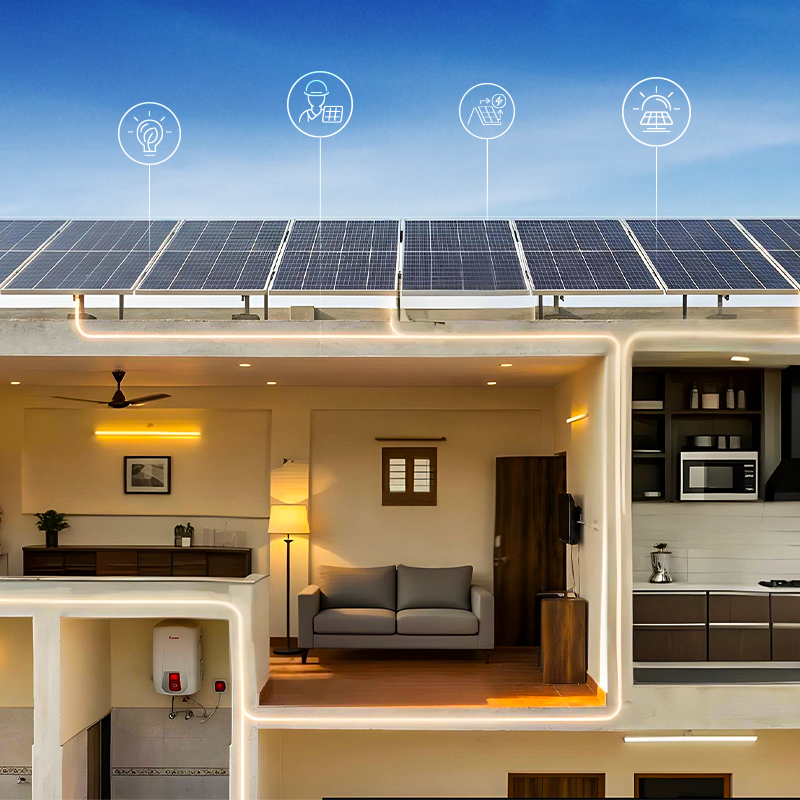
 Solar Rooftop guide

 Solar Rooftop guide
 Solar Rooftop guide
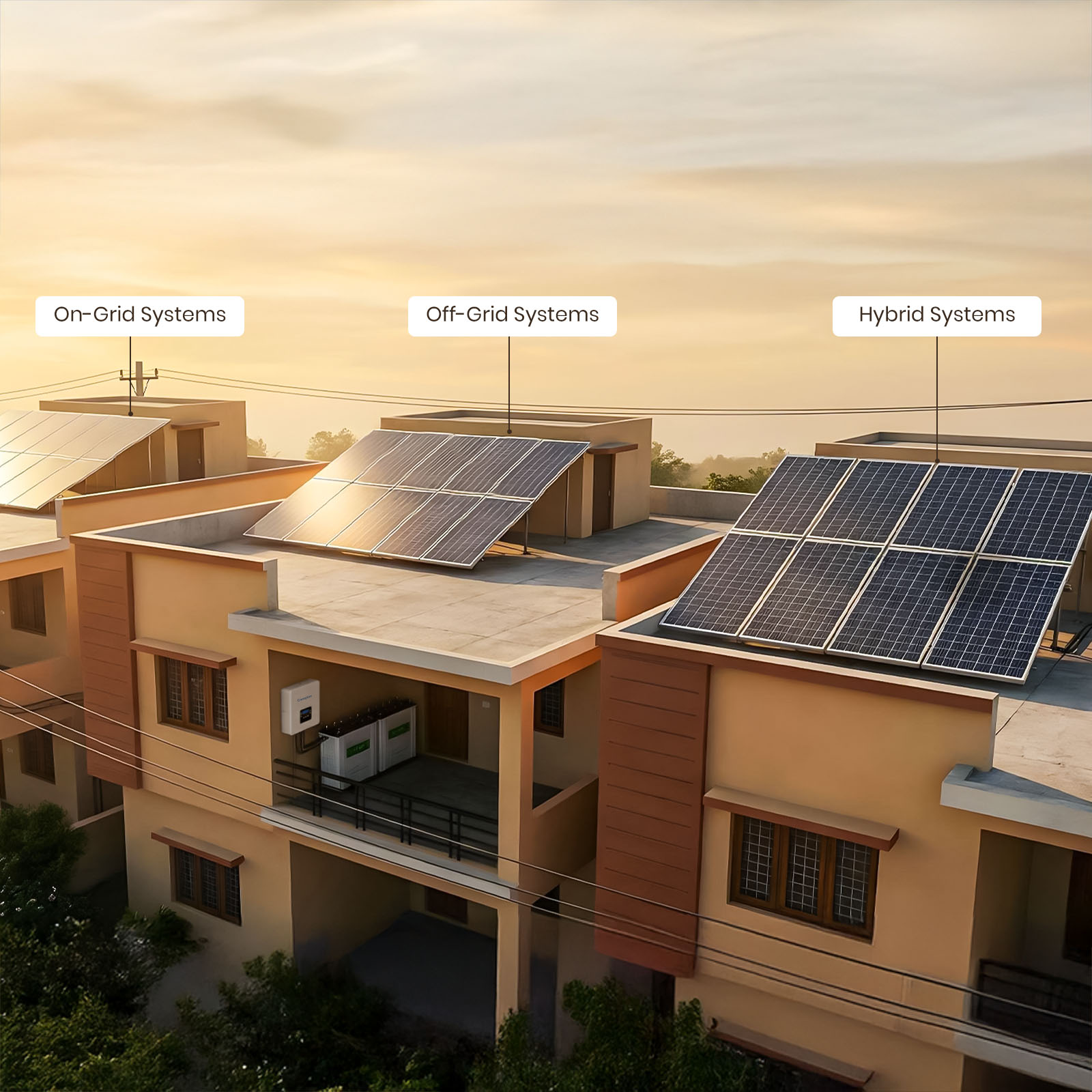 Solar Rooftop guide
 Solar Rooftop guide
Solar Solutions FAQs

What is a Solar Rooftop System?
What is a Solar Rooftop System with Storage facility?
What is a Grid Connected Solar Rooftop System?
What is the average cost of grid connected rooftop solar systems?
How much roof area is required to set up the grid connected rooftop solar system?
What are solar panels and how do they work?
What are the benefits of installing solar panels?
How much does it cost to install solar panels?
Do solar panels work in cloudy or rainy weather?
What maintenance do solar panels require?
Can solar panels be installed on all types of roofs?
How often should solar panels be cleaned?
What is the best way to clean rooftop solar panels?
How long do solar panels typically last?
Do solar panels lose efficiency over time?
What is the average cost of installing a rooftop solar system in India?
How much can I save on electricity bills with solar panels?
Are there any government subsidies or tax benefits available for rooftop solar?
How do net metering and feed-in tariffs work for rooftop solar systems?
What is the difference between on-grid, off-grid, and hybrid solar systems?
How does net metering work for rooftop solar systems?
What happens to power generation on cloudy or rainy days?
Can solar panels generate electricity at night?
How are solar inverters important for rooftop systems?
Switch to clean energy with Crompton Solar Rooftop Solutions
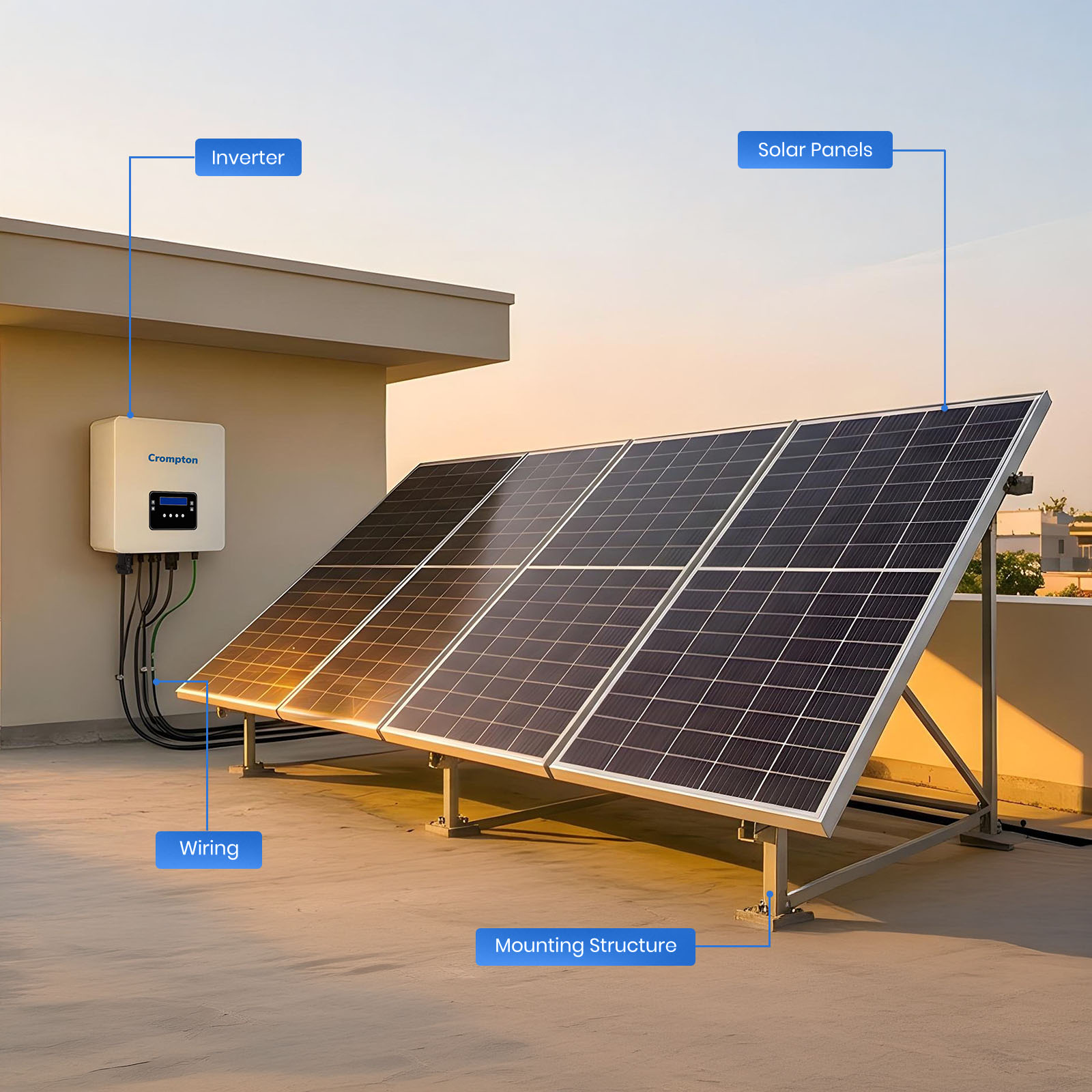
Crompton Solar Rooftop Solutions delivers reliable, high-performance solar rooftop products designed for Indian residential, commercial & industrial requirements. Crompton’s rooftop solutions helps consumers convert their open roof space into power generating unit cutting down on electricity bills, reducing carbon footprint and ensuring long term savings. With 85+ years of trust and innovation, Crompton continues to power a sustainable future with solar technology that delivers efficiency,durability & peace of mind.
About PM-KUSUM Scheme
The PM-KUSUM Scheme is an initiative by the Ministry of New and Renewable Energy, Government of India. The objective of the scheme is to reduce the use of diesel in the agriculture sector and boost farmers’ income. Under this scheme, farmers can receive a central government subsidy of up to 30% or 50% of the total cost for installing standalone solar pumps or for solarising existing grid-connected agricultural pumps.
Additionally, the scheme allows farmers to set up grid-connected solar power plants of up to 2 MW on their barren or fallow land and sell the generated electricity to local DISCOMs at rates decided by the respective state electricity regulators. The implementation of the scheme is carried out through designated departments of the State Governments.
 at 9228880505 or write to us at

