


Power Bank Features & Specifications

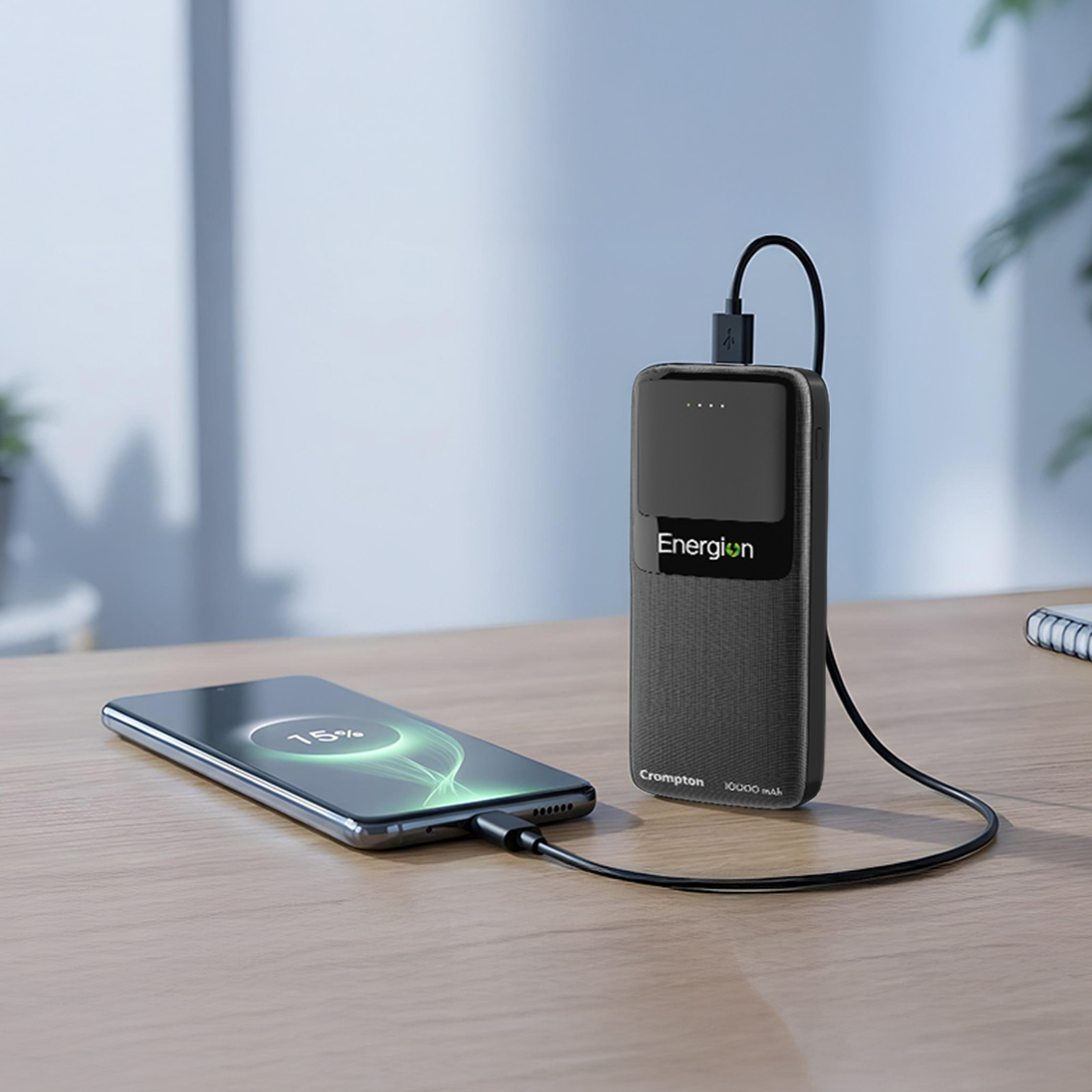
We don’t realise how dependent we have become on a charged battery until the phone drops to 2% at the worst possible moment: during travel, payments, directions or a work call. A reliable backup is no longer a luxury; it is basic preparedness. Much like keeping chargers, cables and essential home appliances ready for convenience, a dependable power bank now forms part of everyday essentials.
Yet many people choose one simply by looking at the biggest number printed on the packaging. In reality, the power bank specification sheet tells a far more important story than capacity alone. Charging speed, voltage stability, safety protection and compatibility all decide whether the device will feel helpful or frustrating. Understanding the actual power bank specs helps you buy something that works with your routine rather than against it.
What Is a Power Bank & How Does It Work?
A power bank is a portable rechargeable battery device that stores electrical energy and supplies it to electronic devices when a wall socket is unavailable. For example, if an extension board distributes electricity from a source to multiple devices, a power bank stores that electricity first and releases it later in a controlled manner.
Inside the power bank case is a lithium-ion battery cell that connects to a small circuit board. Upon plugging the power bank into a wall charging socket, the internal battery gains charge and stores this electricity to distribute later. After you connect your phone to the phone bank, the circuit carefully converts that stored energy into a stable output suitable for the device. This conversion is critical as phones require a specific voltage range to charge safely.
The device performs three tasks at once: storing energy, regulating voltage and protecting the connected gadget. Without this regulation, direct battery discharge could damage sensitive electronics. This controlled conversion is what makes portable charging safe and reliable.
Why Do Power Bank Specifications Matter Before Buying?
Two power banks can look identical in size yet perform very differently. This is why the features of a power bank matter more than appearance or advertised capacity. A higher number does not automatically mean faster charging or better efficiency.
Charging speed depends on output rating, internal circuitry and voltage control. A poorly optimised device may hold a large capacity but deliver slow, inconsistent charging. On the other hand, a balanced design with proper voltage regulation charges devices smoothly and protects long-term battery health.
Understanding best power bank features prevents common disappointments like phones heating while charging, long recharge times or barely getting one full charge from a supposedly large backup.
Battery Capacity Explained in mAh
One of the most searched terms is mAh meaning in power bank. mAh stands for milliampere-hour and indicates how much charge the internal battery can hold. It does not directly represent how many times your phone will charge, because some energy is always lost during conversion.
When stored energy moves from the internal battery to your phone, voltage is adjusted and heat is produced. That process consumes a portion of power. So, a 10,000 mAh unit does not deliver a full 10,000 mAh to your device.
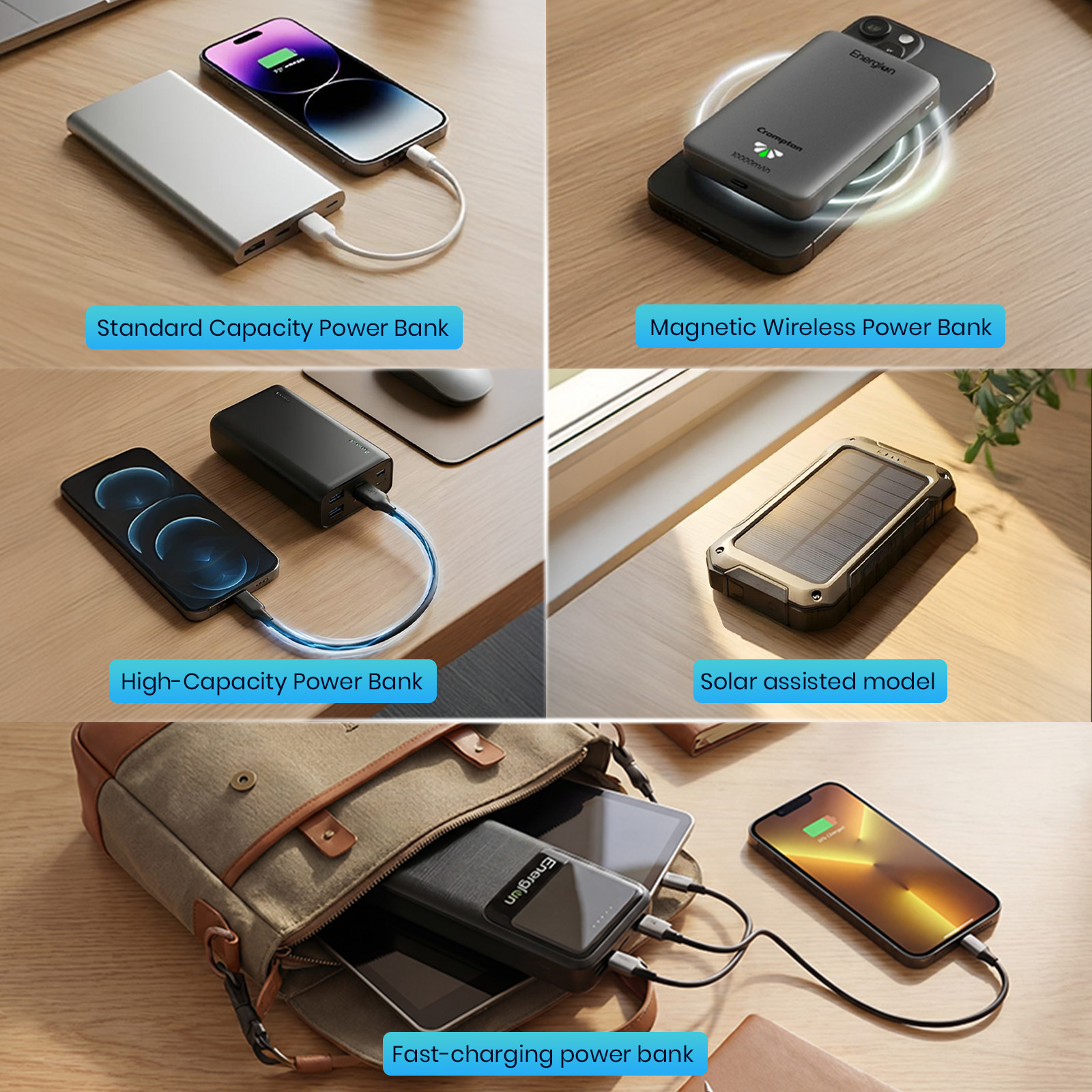
Smaller capacity power banks are ideal for emergencies. Medium capacity ones suit daily commuting. Larger capacity is better for travel or multiple devices. The number indicates endurance, not the exact number of charging cycles.
Types of Output Ports and Connectivity Options
Modern features of power bank designs focus on convenience and compatibility rather than a single cable type:
-
A USB-A port that can accommodate standard charging cables
-
A type-C port for newer devices and a reversible connection
-
Some come with dual-output ports to charge more than one device at once
-
Fast-charging ports for higher power delivery
-
Clear difference between input vs output power bank ports so charging direction remains safe
-
LED indicators that show remaining battery
-
Pass-through charging support in some models
-
Intelligent detection that adjusts output automatically
These options reduce the need to carry multiple adapters and make the device practical across gadgets.
Safety Features You Should Look For
A reliable protection circuit is one of the best power bank features, even though buyers often tend to overlook it. Other features that should be considered include:
-
Over-charge protection for prevention of battery stress
-
Over-discharge protection for preservation of internal battery life
-
Short-circuit protection to ensure safe operation
-
Temperature monitoring to prevent overheating
-
Surge protection during an unstable power supply
-
Automatic cut-off after a full charge
-
Stable voltage regulation for device safety
-
Certified battery cells for durability
Good safety design not only protects the power bank but also helps preserve the phone battery's health over time.
How to Choose the Right Power Bank Based on Usage?
The ideal choice of power bank depends on your daily routine rather than technical enthusiasm. Someone commuting between home and office typically needs a compact backup that fits into a bag pocket. Carrying comfort matters more than massive capacity.
Travellers, on the other hand, often need longer endurance because charging opportunities are uncertain. In such cases, higher capacity becomes useful, but weight and recharge time should still be considered.
Having power bank output voltage explained is helpful. Modern smartphones get charged more quickly with a regulated higher output rather than simply larger stored energy. A balanced specification, moderate size with proper output support, often proves to be more practical than carrying an oversized battery.
Common Mistakes to Avoid When Buying a Power Bank
The most frequent mistake is choosing based purely on mAh. Buyers assume bigger automatically means better. In practice, poor circuitry wastes energy and increases charging time.
Another common oversight is ignoring output rating. A high capacity unit with low output current may take hours to charge a modern smartphone. Similarly, not checking input vs output power bank values leads to painfully slow recharging of the power bank itself.
People also overlook safety protection and build quality. Cheaper electronics without proper circuits may heat up, reducing battery lifespan in both devices. Lastly, carrying excessively heavy models daily often results in leaving them behind. This defeats the purpose entirely.
Powerbanks Provide Dependable Performance in Everyday Use
The right choice of a power bank blends seamlessly into daily routine without drawing attention to itself. Instead of constantly checking battery levels, you can continue calls, navigation, payments or entertainment without interruption. The right balance of capacity, charging speed and safety features makes sure you get dependable performance whenever needed. Over time, it becomes less of an accessory and more of a reliable appliance. Providing quiet support that keeps devices ready, allowing technology to serve you smoothly rather than demand attention.
FAQs on Features & Specifications of Power Bank
What specifications to check before buying power bank?
Look beyond capacity of this home appliance. Check output rating, charging speed, number of ports, safety protection, and build reliability. These determine everyday performance far more than a large number printed on the box.
What does a 10000 mAh power bank mean?
It represents the total stored electrical charge in the internal battery. In real use, it usually charges a smartphone around one to two times depending on the phone’s battery size and energy conversion losses.
What features should a good power bank have?
Good features of a power bank include stable voltage output, reliable safety circuits, efficient charging speed, multiple ports and clear indicators. Together they ensure consistent and dependable portable charging.
 Read Previous Blog

 at 9228880505 or write to us at
