




 For Gifting


How to Identify a Fast Charger?

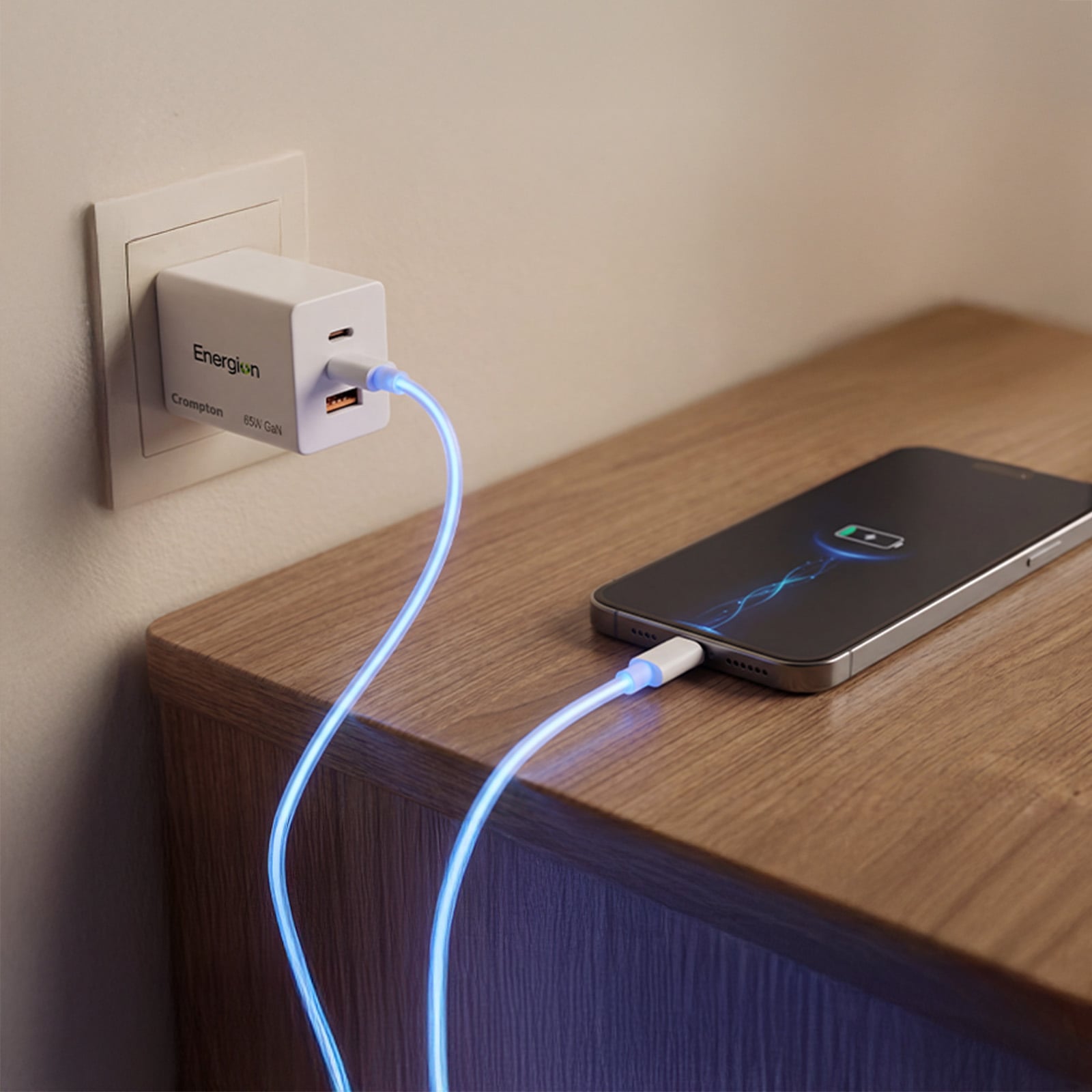
We have all experienced that moment: your phone battery drops below 10% just before stepping out, and you only have a few minutes to charge it. Sometimes the battery jumps quickly to 40%, while at other times it barely moves. The difference usually comes down to the charger you are using. Many adapters look identical, yet their performance varies greatly. This is why knowing how to identify a fast charger is genuinely useful in daily life.
Today, charging speed matters almost as much as battery capacity. A short charging break during work, travel or between meetings can give enough backup for hours of usage, but only if the charger supports faster power delivery. Much like selecting dependable cables or everyday home appliances, the internal design of a charger matters more than appearance. Once you know what to check, fast charger identification becomes simple and prevents slow charging frustration.
What Is a Fast Charger?
A fast charger is a power adapter designed to supply higher electrical power to a device safely, allowing the battery to charge much quicker than with a regular charger. Instead of delivering a fixed low output continuously, it intelligently adjusts voltage and current according to the phone’s requirement.
In practical terms, a standard charger fills the battery slowly at a steady pace. A fast charger increases the energy flow when the battery can safely accept it, especially when the battery level is low. This is why modern devices often gain a large percentage of charge within a short time after plugging in.
Another important feature is communication. The charger and device “talk” before increasing power. If the phone does not support faster charging, the adapter automatically falls back to normal speed. This keeps the battery safe and prevents overheating.
How Does Fast Charging Actually Work?
To understand how to identify a fast charger, it helps to first know what actually controls charging speed. Electrical power is calculated using voltage multiplied by current. A regular charger delivers a fixed and relatively low level of power, so the battery fills slowly and steadily. A fast charger, however, is designed to increase voltage, current, or both, but only within safe limits that your phone can handle.
When you plug in your device, the phone and charger communicate electronically to decide the safe amount of power that can be supplied at that moment. The charger then delivers higher power while the battery level is low and slowly reduces the output as the battery recharges. This prevents the phone from overheating and protects long-term battery health.
A few noticeable signs are:
-
Quick rise in percentage at low battery levels
-
Charging speed slows after about 60–70%
-
Slight warming of the battery during early charging, that reduces later
-
Consistent charging without sudden drops or pauses
Fast charging occurs in stages rather than at a constant rate. The focus of fast charging is on speed when needed and care when the battery nears full capacity. This ensures both convenience and durability.
What Are the Signs That Your Charger Supports Fast Charging?
You can usually recognise fast charging capability without technical tools. Look for these indicators:
-
Higher output ratings are printed on the adapter body
-
Recognisable fast charging symbols on charger such as lightning or rapid charge markings
-
Phone displays a “fast charging” or similar notification
-
The USB Type-C connector is commonly used in newer chargers
-
Thicker cable designed for higher current flow
-
Noticeably shorter time to reach around 50% battery
-
The adapter becomes mildly warm but not excessively hot
-
Product labelling indicating enhanced charging support
-
Multiple output voltage values are listed on the charger
These everyday clues help with practical fast charger identification before or after purchase.
How to Identify Fast Charging from Cable and Adapter Labels?
The most reliable way to confirm how to identify fast charger support is to read the printed electrical specifications on the adapter. Every charger displays its output values, usually shown as voltage and current combinations.
For example, you might see several output levels rather than one fixed number. Multiple levels generally indicate adaptive charging capability. You can calculate the wattage of fast charger by multiplying voltage and current and higher wattage usually means faster charging when supported by the phone.
Symbols also provide guidance. Many adapters include fast charging symbols on charger bodies to indicate higher speed capability. While icons differ between brands, they usually represent enhanced charging output.
The cable makes a difference as well. Some cables are designed only for basic charging and limit current flow. Using such a cable with a fast charger can result in normal charging speed, which often confuses users who assume the adapter is faulty.
Differences Between Fast Chargers and Regular Chargers
The difference between chargers is not just the charging time; the technology inside also differs.
A regular charger delivers steady low power regardless of the battery’s condition. A fast charger continuously adapts its output based on the battery’s state and temperature. It increases power at low battery levels and reduces it near full capacity.
The efficiency of both also differs. A fast charger can bring a phone to a usable charge level within minutes, while a regular charger requires a much longer connection period. Despite this speed, both chargers slow down as the battery approaches full charge to maintain battery health.
For daily use, the advantage is convenience. You spend more time using your device and less time waiting.
Common Fast Charging Technologies Explained
While the name of the charging technology may vary, the principle remains the same:
-
Voltage boost charging - it increases voltage for higher power delivery
-
Current boost charging - it increases current while maintaining safe voltage
-
Adaptive temperature charging - it adjusts speed based on heat levels
-
Staged charging - it is initially fast and slow near full capacity
-
Cable-controlled charging - a cable chip regulates safe transfer of power
Safety Tips When Using Fast Chargers
Fast charging is safe when used correctly. Following simple precautions helps preserve battery life:
-
Use original or certified charging accessories
-
Avoid frayed or damaged cables
-
Do not cover the charger while plugged in
-
Keep the charger away from moisture
-
Avoid charging on beds or cushions where heat cannot escape
-
Disconnect once fully charged when practical
-
Avoid very low-quality adapters
-
Allow air circulation around the adapter
Good habits matter as much as good hardware.
The Right Charger Saves Time
Knowing how to identify fast chargers saves time and prevents confusion. Once you recognise the signs, output rating, cable type, and charging behaviour, you can confidently select the right adapter. The result is simple: less waiting beside a socket and more uninterrupted use of your device throughout the day.
FAQs on How to Identify a Fast Charger
How many watts is a fast charger?
A fast charger generally provides higher wattage than standard chargers. The exact value depends on device compatibility, but higher wattage usually results in quicker charging. Generally, 18W and above is considered fast charging for phones, while laptops may require 45W or more.
Does cable affect fast charging?
Yes. The cable must support higher current transfer. A basic cable used through an extension board may restrict charging speed even if the adapter is capable of faster charging.
How to test fast charging speed?
Plug the charger into a compatible device and observe both the charging notification and the time taken to reach about half battery. A noticeably shorter time confirms faster charging capability.
 Read Previous Blog

 at 9228880505 or write to us at
