





Types of Wire Explained: How to Choose the Right One for Your Home

To keep your home powered up, the types of wire hidden behind your walls are just as crucial as the appliances they connect to. Choose the wrong type, and you might end up with energy loss, overheating, or even safety hazards. In modern homes, electricity does so much more than just lighting up a room. With the increased use of smart devices, high-powered appliances, and ever-changing energy demands, it’s essential to have wiring that’s ready for the future.
By learning about the different types of electric wires out there, you can make informed choices that enhance both safety and performance. So, let’s take a closer look and explore the various types of cables and wires, how to choose the right one for each area of your home, and why investing in quality products is important.
Different Types of Wires to Meet All Household Needs
When it comes to keeping your home powered up, the type of wiring you choose is important. Depending on your specific needs and where you’re using them, some wires might be a much better option than others. Here’s a guide to the most common types of electrical wiring and cables that can suit various household requirements:
-
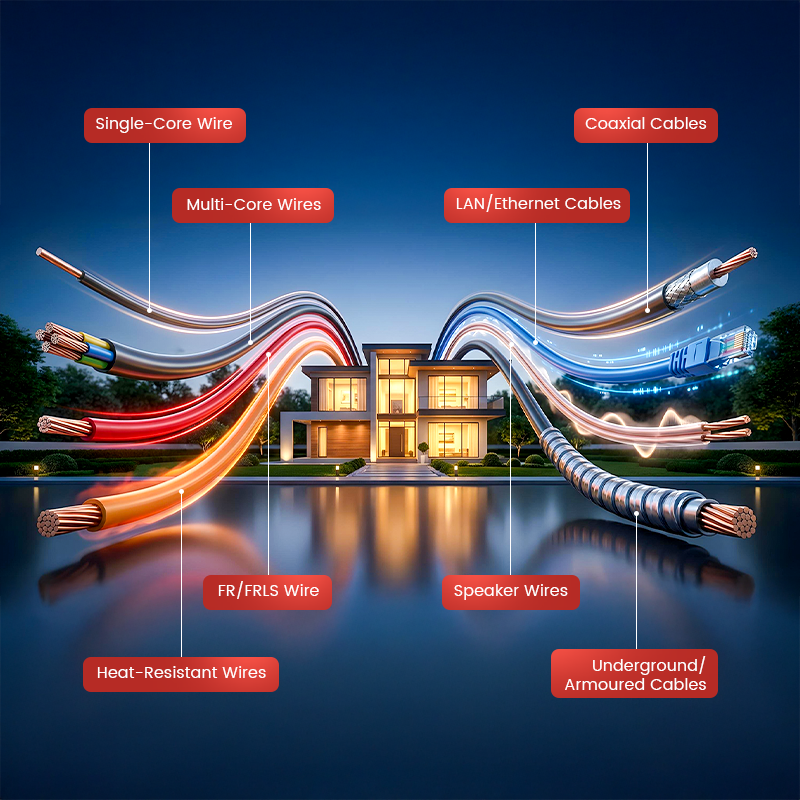
Single-Core Wires
Single-core wires feature one conductor. This makes them flexible and easy to install. You’ll often find them powering basic household electrical points like fans, lights, and switches. They handle moderate current levels well, making them perfect for everyday use in homes without the worry of overload. Plus, they come in various gauges, so electricians can easily find the right fit for your specific wiring needs.
-
Multi-Core Wires
As the name implies, multi-core wires consist of two or more conductors wrapped in a single layer of insulation. These wires are robust compared to single-core options and are typically used for heavy-duty appliances like washing machines, refrigerators, geysers, and air conditioners. Their design minimises power loss and promotes a smoother current flow.
-
FR (Flame Retardant) and FR LSH (Flame Retardant Low Smoke Low Halogen) Wires
Safety is the top priority with FR, FR LSH and wires. FR wires are built to resist fire spread, while FRLS wires take it a step further by producing significantly less smoke and toxic fumes during electrical incidents. These wires are often the go-to option for keeping indoor spaces safe, especially in bedrooms, children’s rooms, living areas, and study spaces.
-
Heat-Resistant Wires
Heat-resistant electrical wires are crucial for areas that face high temperatures or for appliances that run for extended periods. You will typically find them in kitchens, near stoves, around geysers, or in spots where heat tends to build up. Their insulation is designed to withstand melting and degradation, ensuring they perform reliably even under continuous thermal stress.
-
Coaxial Cables
Coaxial cables are used for audio-visual signals and data transmission. They're crucial for everything from cable TV and internet modems to satellite connections, CCTV systems, and video surveillance setups. Their shielded design keeps signals safe from interference, ensuring you enjoy stable and crystal-clear connectivity.
-
LAN / Ethernet Cables
These types of cable wires are the backbone of internet networks, connecting routers, Wi-Fi extenders, smart TVs, laptops, and gaming devices. LAN cables provide fast and reliable internet connections, making them essential for homes where people work from home or have multiple devices online at once.
-
Speaker Wires
Speaker wires are responsible for transmitting audio signals from amplifiers to speakers. They are crafted to reduce distortion and deliver sharp, clear sound quality. High-quality speaker wires are a must-have for home theatre systems, soundbars, and any entertainment setup that aims for top-notch audio performance.
-
Underground / Armoured Cables
These are other types of electrical cable designed to withstand the outdoor environment. With a sturdy metal protective layer, they can handle moisture, soil pressure, rodent bites, and physical damage. These cables are perfect for underground wiring, garden lighting, outdoor CCTV systems, garages, and driveways.
How to Choose the Right Wire for Your Home?
Choosing the right house wire is more than just picking up a brand; it’s a matter of safety and performance. You need to think about load capacity, durability, and how well they’ll hold up over time. Here are important factors to keep in mind:
-
Wire Gauge (Thickness)
The thickness of a wire is crucial because it determines how much current it can handle safely. If you use a thinner wire for a high-power device, you risk overheating or even electrical failure. Thicker wires are necessary for appliances like air conditioners, microwaves, and geysers, while thinner wires are suitable for lights and fans. Always select the wire gauge based on the appliance's load and the length of the wiring.
-
Insulation Quality
Quality insulation is your first line of defence against electric shocks, heat, moisture, and fire hazards. Wires with FR and FRLS insulation are great choices for homes since they resist fire and minimise harmful smoke. Plus, good insulation can extend the wire’s lifespan by preventing cracks or melting over time.
-
Number of Cores
For simple circuits, single-core wires are usually sufficient, but if you’re dealing with heavier loads, multi-core wires are the way to go. Appliances like washing machines, ovens, and air conditioners need multi-core wires to handle higher current levels and keep voltage fluctuations in check.
-
Wire Material
Copper is the most preferable choice for conductors because of its excellent conductivity and efficiency. It helps reduce power loss and enhances the wire’s longevity. On the other hand, aluminium wires are becoming less common and are generally not recommended for internal household wiring.
-
Purpose of Use
Different areas of your home require different types of electric cable. For instance, you’ll want heat-resistant wires in the kitchen, FRLS wires in the bedrooms, flexible wires for appliances, and armoured cables for outdoor spaces. Choosing the right type of wire for each location is key to ensuring safety and optimal performance.
-
Certifications and Standards
Always opt for wires that meet BIS (Bureau of Indian Standards) and other safety regulations. Certified wires guarantee safe insulation, quality conductors, and reliable electrical performance.
-
Durability and Flexibility
Flexible wires are perfect for appliances and navigating those tricky, tight corners. On the other hand, thicker, rigid house wiring is essential for the main circuits. Ensuring durability means fewer repairs and a more reliable electrical setup that lasts longer.
Exploring Crompton Wires: Your Key to Safe and Efficient Electric Supply
Selecting the right wiring goes beyond just a technical choice; it’s an investment in the safety and performance of your home for the long-term. By familiarising yourself with the various types of wires and understanding what influences their efficiency, you can make informed decisions that suit your space perfectly.
So, whether you’re moving into a new home or planning a renovation, take a moment to assess each room and choose the appropriate wire for its purpose. If you’re on the hunt for dependable, long-lasting wiring solutions, Crompton’s collection is definitely worth checking out. Thoughtfully designed for Indian homes, these wires combine performance, durability, and safety, all while offering a range of electric wire prices to fit various needs and budgets.
Explore Crompton’s various kinds of wires and cables for reliable, long-lasting performance.
FAQs on Types of Electric Wires
What is the most common type of wire used in homes?
For general household circuits, single-core copper wires with FR or FRLS insulation are the go-to choice. However, it also depends on the usage. Different applications may require specific house wire types, including multi-core or heat-resistant wires.
How do I choose the right wire gauge?
When picking a wire gauge, consider the power load of your appliances. Thicker wires are needed for higher loads. If you ever find yourself in doubt, don’t hesitate to reach out to a certified electrician and opt for wires that comply with BIS safety standards.
What are the different types of electrical wiring?
You’ll typically find surface conduit wiring, concealed conduit wiring, and casing-and-capping wiring as common electrical wiring systems. Each option brings its own set of benefits when it comes to safety, looks, and how easy it is to maintain.
What types of wire are used outdoors?
For outdoor or underground wiring, armoured and weather-resistant cables are your best bet. These kinds of cable wires are built to withstand moisture, UV rays, soil pressure, and temperature changes. If you're setting up lighting in open spaces or gardens, make sure to opt for heavy-duty cables that are UV-protected to ensure safety and performance.
Which type of wire is best for electricity?
Copper wires with top-notch FRLS insulation strike the perfect balance between conductivity, safety, and durability. These materials are great at carrying current without overheating, and they also help reduce smoke and harmful emissions in case of a fire.
Which wire is more resistant?
FRLS wires are highly resistant to fire, heat, and smoke, while heat-resistant wires are designed to handle thermal stress. These kinds of cable wires are designed to handle moisture, sunlight, temperature fluctuations, and physical wear and tear.
What is the process for choosing the right size wire connector for electrical wiring?
When selecting connectors, consider the wire gauge, how many wires you need to join, and the voltage requirements of your circuit. Make sure the connector fits tightly, can handle the load, and is suitable for the type of insulation you’re working with. If you’re unsure, it’s best to stick to the manufacturer’s guidelines or reach out to an electrician for advice.
 Read Previous Blog


 at 9228880505 or write to us at
