





Difference Between BLDC Fans vs Normal Fans

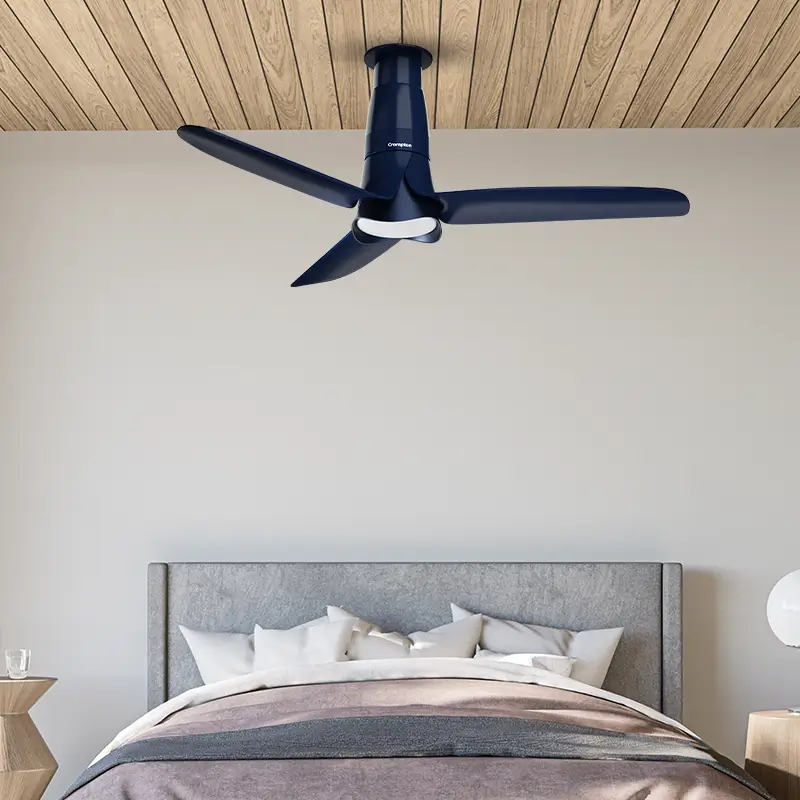
BLDC- Brushless Direct-Current motors convert electric energy to mechanical energy. Intelligent speed control, high torque, and low maintenance characterize DC motors. Robotics and heavy-duty vehicles are among the fields of application for DC motors. A closed-loop controller receives power from the BLDC through an inverter.
The revolutionary feature makes the BLDC motor a futuristic need.
- Robotics and heavy-duty vehicles are among these industries.
- A closed-loop controller receives power from theBLDCvia an inverter.
- Current passes to its windings to control the speed and torque of the control unit.
- BLDC motors have high efficiency, with low maintenance requirements.
- They are more stable and long-lasting.
What is BLDC Fan Technology?
BLDC fan technology is creating a buzz in the market. It is energy efficient and helps in cost-cutting over electricity bills. A brushless direct current motor (BLDC) functions on direct-current electricity. BLDC motors contain permanent magnets rather than electromagnets used in induction motors.
The permanent magnet contains less heat loss and energy compared to electromagnets. A BLDC motor converts alternate current into DC. That works at power fluctuations and on low voltage. The BLDC Fan Technology in Energion Stylus helps save energy and makes your living room more stylish and aesthetic.
The BLDC motor has three working components: the rotor, stator, and shaft. It uses a sequence of gears to convert electrical into mechanical energy. A BLDC fan driver attains their power from SMPS.
How Do Normal Ceiling Fans Work?
A normal ceiling fan uses a basic electric motor and rotating blades to circulate air and create a cooling breeze. Unlike advanced BLDC fans, traditional fans rely on an induction motor with mechanical commutation.
- Electric Motor: Uses an AC induction motor that converts electricity into rotational motion through electromagnets and brush/commutator systems.
- Blades Rotate: The motor spins the fan blades, creating airflow that increases air movement in a room.
- Cooling Effect: Airflow increases heat evaporation from skin, making the room feel cooler even without lowering temperature.
- Simple Design: Traditional fans are reliable, straightforward to install and operate using wall regulators or pull chains.
BLDC Fan Vs Regular Fan Comparison
BLDC (Brushless Direct Current) fans use advanced brushless motors with electronic commutation, while normal fans use traditional AC induction motors. Best BLDC ceiling fans to buy deliver significantly higher energy efficiency, quieter operation, and longer life due to fewer moving parts and reduced friction. Normal fans are generally cheaper upfront but consume more power over time and may require more maintenance. BLDC fan benefits vs normal fan often include smart features like remote control and precise speed control, making them a cost-effective choice for modern homes.
Following is the difference between BLDC and normal fan:
|
Feature |
BLDC Fan |
Normal Fan |
|
Power Consumption |
Low (≈30–35W) |
Higher (≈60–80W) |
|
Noise |
Quiet |
Noisier |
|
Efficiency |
High |
Standard |
|
Initial Cost |
Higher |
Lower |
Advantages and Disadvantages of BLDC Fan
Like every technology has two sides: BLDC fans also have advantages and disadvantages.
Advantages of BLDC fans
The BLDC fan price and features give them the following advantages:
- Traditional Ceiling fans run on AC motors.Yet,fans with BLDC technology use brushless DC engines that cut power consumption by 65%.
- The carbon brushes are absent from the rotor and the stator of the BLDCfan. Hence, there is no hidden maintenance cost involved in the replacement of brushes.
- BLDC fans maintain high torque to secure high-quality performance.
- An induction motor has carbon bruises that create friction, which creates noise. A BLDCfan has zero friction, hence creating minimal noise.
- BLDCmotors comprise electronic control systems. That promotes fewer possibilities of collapse because of wear and tear. An induction motor fan has a mechanical commutation unit.
Disadvantages of BLDC fans
Some disadvantages are:
- BLDCfans are expensive compared to an induction motor fan. The setup comprises an electronic controller in BLDC. An ordinary fan motor has an inexpensive mechanical commutation system.
- BLDC fans produce minimal vibrations at low voltage, which causes resonance. But, it is adjustable.
- TheBLDCtechnology is new to fans, and it is difficult to find an experienced technician to install it.
- BLDCmotor has complicated wiring to install. Because of the presence of an electronic control unit that links to electromagnets
Importance of BLDC fan in Day to Day Life
Fans are an integral part of every individual’s life, irrespective of weather. We don’t realize that the fan runs for hours and consumes more units than a refrigerator. Fans are the major contributor to our electricity costs.
- BLDC fans consume considerate power. It consumes a minimal current lowered by 65% compared to an induction motor fan.
- BLDCmotor runs on low current so can run longer on solar, regular, and inverters.
- Theyoperateon a remote control that promotes luxury and comfort hand-in-hand.
- BLDCfans provide a comfort zone by facilitating timer and sleep mode as functions.
- BLDC fan has the next-generation technology. That facility sets specifications like speed reduction at different points in time
How much money does a BLDC fan save in a year?
Calculate your savings on BLDC fans here
An ordinary induction motor fan consumes about 80 Watts. A BLDC motor fan’s 35 Watt consumption. We operate a fan for almost 8 hours, 365 days per year. Let’s assume the residential power consumption rate is Rs 7 per unit.
A traditional fan will consume around 233.6 units (80 Watts 0.08*8*365) that cost around Rs 1635.2 (233.6 units * 7)
A BLDC fan consumes 87.6 units (30 Watts = 0.03*8*365) that costs around Rs 613.2 (87.6*7)
That saves us around Rs. 1022.per year. Most fans work 8+ hours per day goes up to 1500-2000 rupees.
FAQs on BLDC Fans vs Normal Fans
-
How does a BLDC fan differ from a normal fan in terms of energy efficiency?
A BLDC fan uses advanced motor technology, consuming nearly half the power of traditional ceiling fans. Energy efficient BLDC fans for home deliver higher efficiency and reduce electricity bills significantly. -
Are there any drawbacks to using BLDC vs normal fan?
The main drawback of a BLDC fan is the higher BLDC fan price compared to standard ceiling fans. However, long-term energy savings usually offset the initial investment. -
BLDC fan vs normal fan which is more expensive?
Yes, the ceiling fan price for a BLDC ceiling fan is higher than conventional models. Still, lower power consumption makes it cost-effective over time. -
How much electricity can a BLDC fan save compared to a regular ceiling fan?
A BLDC fan can save up to 50–60% electricity compared to standard ceiling fans, making it one of the most efficient fan options for homes. -
Do BLDC fans offer better air delivery than normal fans?
Air delivery depends on design, but many models, including the best BLDC fan in India, match or exceed traditional ceiling fans in airflow performance. -
Are BLDC fans quieter than normal fans?
Yes, a BLDC ceiling fan operates more quietly than conventional ceiling fans due to reduced friction and smoother motor functioning. -
How does installation of normal fan vs BLDC fan different?
Installation of a BLDC fan is similar to regular ceiling fans. Wiring and mounting remain the same, making replacement simple and convenient.
 Read Previous Blog



 at 9228880505 or write to us at
