




 For Gifting


LED Light Power Consumption Explained: Efficiency and Savings Tips

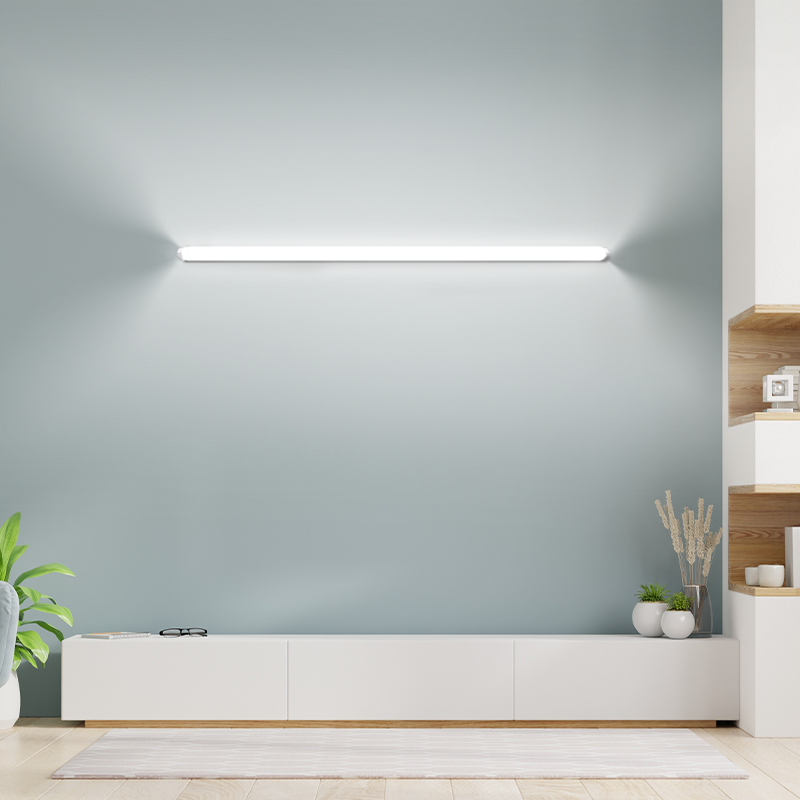
As savvy homeowners, it's crucial to understand not only the aesthetics of the lights we choose but also their impact on our energy bills. Let's dive into LED lights and explore their inner workings, LED light power consumption, and influencing factors.
How does an LED light work?
LED lights, short for Light Emitting Diodes, are a result of a phenomenon known as electroluminescence. When an electric current is applied to the semiconductor material within an LED, it excites the electrons, causing them to emit photons of light. Unlike traditional incandescent bulbs, which produce light through heat generation, LEDs produce light directly through this electron movement. This fundamental difference makes LED lights electric consumption highly efficient and enables them to convert a greater percentage of electrical energy into visible light.
How to Calculate LED Light’s Power Consumption?
To calculate LED light energy consumption and estimate cost, consider the power rating and duration of usage. Here's a guide:
- Determine LED light power rating: Check the wattage on the packaging or product. Let's assume it's 10 watts (W).
- Calculate energy consumption: Multiply power rating (in W) by usage duration (in hours). For example, if you use the LED light for 5 hours per day, the calculation would be:
Energy Consumption = Power Rating (in watts) × Duration of Usage (in hours)
Energy Consumption = 10 W × 5 hours = 50 watt-hours (Wh)
- Convert to kilowatt-hours: Divide watt-hours by 1,000.
Example: Energy Consumption (in kWh) = 50 Wh ÷ 1,000 = 0.05 kWh. - Calculate cost: To estimate the cost, you need to know the rate at which your utility company charges for electricity. Then, multiply energy consumption (in kWh) by electricity rate (in ₹/kWh) to get the cost.
For example, if the electricity rate is ₹0.15 per kWh:
Cost = 0.05 kWh × ₹0.15/kWh = ₹0.0075.
In this example, the estimated cost for using the LED light 5 hours per day at a rate of ₹0.15/kWh would be approximately ₹0.0075.
So, this is your answer to the question – Do LED light use a lot of electricity? As you can see, LED light do not consume much electricity.
Note: Adjust values for your LED light rating, usage, and electricity rate in your area.
LED Bulb’s Power Consumption Based on Wattage
The power usage of LED lights can vary quite a bit depending on their wattage, which plays a key role in determining brightness, usage, and overall efficiency. Since LED lights reduce energy consumption, picking up the right wattage is essential for getting the best performance while keeping your electricity bills in check. Lower wattages are perfect for creating a soft glow, medium wattages are great for everyday home lighting, and higher wattages shine in larger or commercial areas.
Let us understand consumption categories of LED bulbs having varying power consumption based on their wattages. Here's a breakdown:
|
LED Bulb Type |
Wattage Range |
Primary Uses |
|
Low Wattage LED Bulbs |
1W – 9W |
Used for accent lighting, nightlights, decorative fixtures, or soft ambient glow. |
|
Medium Wattage LED Bulbs |
10W – 14W |
Ideal for general lighting in living rooms, bedrooms, kitchens, and office spaces. |
|
High Wattage LED Bulbs |
15W and above |
Suitable for commercial, industrial, outdoor, or large-area lighting where high brightness is required. |
Quick Calculation Example:
Let's learn how to calculate power consumption of LED light with an example. Consider a scenario where you want to calculate the cost and LED power consumption of a 9-watt bulb. As calculation formula mentioned above:
Calculate energy consumption: Energy Consumption = 9W × 6 hours = 54 watt-hours (Wh).
Convert to kilowatt-hours: Energy Consumption (in kWh) = 54 Wh ÷ 1,000 = 0.054 kWh.
Calculate cost: Assuming an electricity rate of ₹0.12 per kWh, Cost = 0.054 kWh × ₹0.12/kWh = ₹0.00648.
Using a 9W LED bulb for 6 hours per day, with a rate of ₹0.12 per kWh, would cost approximately ₹0.00648.
Adjust calculations for specific wattage, usage duration, and electricity rate in your area.
LED Power Consumption vs Traditional Lights
LEDs are a game-changer when it comes to energy efficiency compared to traditional bulbs. By understanding LED power consumption, you can see the significant savings on your electricity bill over time. Unlike incandescent and CFL bulbs, LED lights convert most of their energy into light rather than heat, which means lower bills, a longer lifespan, and reduced LED light electricity consumption. By comparing everyday situations, you can easily see how LED energy consumption differs from traditional lighting. These examples highlight how a simple switch can improve both your lighting quality and your monthly expenses.
Why LEDs Outperform Traditional Lights
- The lower LED power consumption means they require far fewer watts to achieve the same brightness as incandescent or CFL bulbs.
- Power usage of LED lights remains less because they generate minimal heat.
- With a significantly longer lifespan, LEDs cut down on both electricity use and replacement costs.
- Homes that make the switch to LEDs often see a dramatic decrease in their monthly bills and overall energy waste.
Real-Life Scenarios: Before & After Switching to LEDs
- Replacing a 60W Incandescent with a 9W LED
- Annual consumption for incandescent: ~87 kWh
- Annual consumption for LED: ~13 kWh
- Annual savings: ₹600 per bulb
You get the same brightness while LED light electricity consumption drops by nearly 85%.
- Switching Ten 40W Tube Lights to 20W LED Battens
- Traditional consumption: ~584 kWh/year
- LED consumption: ~292 kWh/year
- Annual savings: ₹2,300+ Perfect for homes with multiple lighting points.
- Five-Year Cost Difference
- 9W LED lifespan: up to 25,000 hours
- 60W incandescent lifespan: ~1,000 hours
LEDs significantly cut down on replacement costs and energy waste, ensuring you get long-term value.
The Factors Influencing Power Usage of LED Lights
The amount of LED light energy consumption is shaped by various performance and design factors that affect how efficiently each fixture converts electricity into light. While it's well-known that LEDs are energy savers, understanding what impacts their efficiency can lead to smarter lighting decisions.
Factors such as wattage, driver quality, how long they're used, dimming capabilities, and heat management all play a part in their overall efficiency. So, if you're wondering do LED lights use a lot of electricity, the answer largely depends on these components and how they are integrated into your lighting system.
LED power consumption isn't a one-size-fits-all deal—it varies depending on several factors:
-
Brightness level
The brightness level affects LED power consumption. Higher brightness levels generally require more power to produce intense illumination.
-
Colourtemperature
LED power consumption varies based on colour temperatures. Warm lights consume less power compared to their cool white counterparts due to differences in LED chip and phosphor materials.
-
Dimming capabilities
Dimmable and smart LED lights offer adjustable brightness to suit individual preferences. However, not all LEDs are dimmable, and incompatible dimmer switches can lead to flickering or inefficient LED light power consumption.
-
Quality of the LED
LED quality and components like drivers and heat sinks affect LED light power consumption. Higher-quality LEDs with efficient thermal management consume less power.
Comparison with Traditional Lighting Options
To understand why LEDs are energy-efficient, you must know how traditional lighting options work.
|
Lighting Type |
How It Works |
Energy Use & Efficiency |
|
Incandescent Bulbs |
Led light electricity consumption becomes easier to understand when compared with incandescent bulbs. These bulbs produce light by heating a filament enclosed in a vacuum or inert-gas-filled glass bulb. As the filament glows, it emits light. |
They waste most energy as heat, becoming extremely hot during use. Their efficiency is the lowest among all lighting types. |
|
CFL (Compact Fluorescent Lamps) |
CFLs contain argon and mercury vapor inside a coated tube. When electricity passes through, UV light forms, which reacts with the coating to create visible light. |
More efficient than incandescent bulbs but still lose energy as heat. Their lifespan and performance are moderate. |
|
LEDs (Light Emitting Diodes) |
LEDs generate light through semiconductor technology, converting electricity directly into illumination without intense heat output. |
LED lights reduce energy consumption, lower electricity bills, and offer an exceptionally long lifespan. They are the most efficient option for modern homes. |
|
Halogen Bulbs |
Halogens operate similarly to incandescent lamps but include halogen gas that redeposits evaporated tungsten back onto the filament, enabling brighter, whiter light. |
Slightly more efficient than incandescent bulbs, but still waste considerable energy as heat and have shorter lifespans compared to LEDs. |
|
Fluorescent Tube Lights |
These use gas discharge technology inside a long tube, producing ultraviolet radiation that interacts with a phosphor coating to create visible light. |
More energy-efficient than CFLs and incandescent bulbs but bulkier, with moderate heat loss and shorter lifespan than LEDs. |
|
Smart Lighting (LED-based) |
Uses LED technology combined with digital controls for dimming, scheduling, and automation, enhancing functionality through connected systems. |
Highly efficient, customisable, and designed for long-term energy savings. Smart LEDs maximise performance while maintaining low consumption. |
Crompton’s LED Lights
At Crompton, we take immense pride in our extensive selection of innovative lighting solutions that transform and elevate your living spaces. Our energy-efficient, low LED power consumption LED bulbs, LED batten lights, LED table lamps, LED downlight and LED ceiling lights are meticulously engineered to provide exceptional light output without compromising aesthetics or quality. At Crompton, we ensure high quality and maximum performance in every product. Make the smart and simpler choice today with Crompton.
Understanding led power consumption becomes even more useful when you know how to calculate power consumption of led lights, helping you make smarter, long-term lighting decisions for every room.
LED lights revolutionise the lighting industry with their remarkable energy efficiency and extended lifespan. Understanding the factors that influence an LED light power consumption can help you make informed choices when selecting lighting options. So, switch to smart LED bulbs, save on bills, and let your home glow while the earth thank you.
FAQs on LED Light’s Electricity Consumption
-
Do LED lights consume a lot of electricity?
No, LED lights consume less electricity compared to traditional lights.
-
Are smart LED lights more expensive than traditional lights?
Initially, LED lights may be more expensive, but they are cost-effective in the long run due to their energy efficiency and longer lifespan.
-
Do LED lights emit heat?
LED lights emit significantly less heat compared to traditional lights.
-
Can I replace my existing bulbs with LED lights?
Yes, you can replace your existing bulbs with LED lights, as they are available in various shapes and sizes to fit different fixtures.
-
How long do LED lights last compared to traditional bulbs?
LED lights are known for their impressive longevity, lasting anywhere from 25,000 to 50,000 hours. This is a significant improvement over traditional incandescent and CFL bulbs. LED light power consumption not only contributes to their extended lifespan but also makes them a durable and cost-effective lighting option for any environment.
-
Do dimming LED lights save electricity?
Absolutely! When you dim the lights, the LED light energy consumption drops, which is a great way to save electricity. Dimming reduces the wattage used, allowing you to lower your overall energy usage without sacrificing brightness. Plus, it can even help extend the life of the LED, making it a smart and flexible choice for your home lighting needs.
 Read Previous Blog



 at 9228880505 or write to us at
