





The Invisible Pollutants in the Indian Kitchen

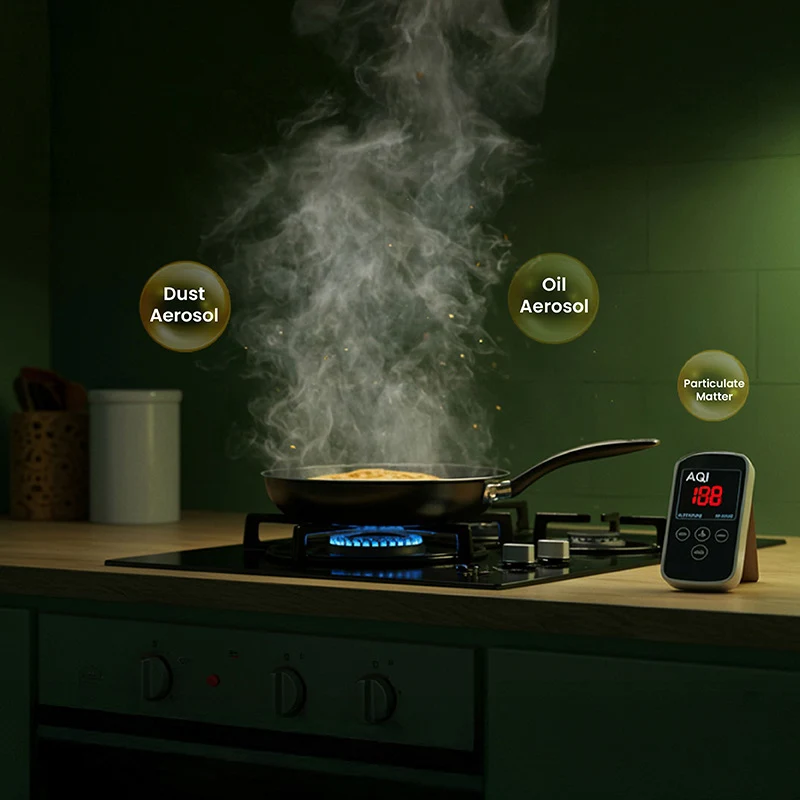
The kitchen is often the most loved corner of a home. It is where the scent of spices, fresh ingredients and everyday cooking comes together. But behind this familiar comfort lies a concern we rarely notice: kitchen air pollution. It isn’t only the smoke we see while cooking, but the unseen particles and gases that quietly linger in the air long after the meal is done.
Understanding the Silent Threat in Kitchens
The phrase invisible kitchen pollutants captures the essence of what happens when we cook: tiny airborne particles, gases and vapours generated during the cooking process accumulate in the ambient air. In Indian kitchens, especially those using traditional approaches, these can include combustion by-products from gas, oil vapours from frying, fine particulate matter from high-heat cooking and volatile organic compounds from ingredients or cleaning agents. All of this contributes to cooking air pollution.
Studies and observations show that indoor AQI levels in Indian households often spike during cooking hours. Poor ventilation and the absence of proper exhaust systems mean that pollutants linger, and this is a real concern when we consider how much time we spend in our kitchens and adjoining living spaces.
Gas Stoves and Air Quality
Indian cooking, with its rich aromas and techniques like tadka, deep-frying and paratha-making, often fills the kitchen with smoke, steam and lingering odours. This can significantly raise indoor air pollutant levels, including nitrogen dioxide (NO₂), carbon monoxide (CO) and fine particles that remain suspended long after cooking ends. In short, gas stoves and air quality are deeply linked.
And it isn’t just the flame. The moment oil begins to smoke, the moment spices hit hot surfaces, the moment pans start bubbling, particles from cooking rise, disperse and settle on surfaces. These add to the broader category of poor Kitchen Air Quality.
Recognising the Sources
Here’s a quick breakdown of typical kitchen pollution sources and prevention tips:
-
Combustion of Gas:Even well-maintained gas cooktops emit NO₂ and CO. Solution: ensure a properly installed gas hob, use a good chimney or extractor.
-
Frying and High-Temperature Cooking:Smoke, oil vapour and fine particles escape into the room. Solution: use a high-suction chimney for removal of the vapours at source.
-
Poor Ventilation:Closed windows, no exhaust fan or low-capacity chimney means pollutants stagnate. Solution: keep windows open when cooking or ensure mechanical ventilation.
-
Inadequate Extraction:Many kitchens lack a proper chimney or use old/inefficient systems. Solution: upgrade to smarter and powerful units from reliable kitchen appliances brands.
-
Cleaning and Upkeep:Grease buildup on surfaces and extraction units reduces their efficiency, increasing emissions. Solution: regular cleaning of your kitchen chimney’s oil tray and filters.
Best Ventilation Solutions for Indian Kitchens
To reduce cooking air pollution and ensure healthier indoor air, you’ll want to focus on ventilation and extraction. Some of the most best ventilation solutions for Indian kitchens include:
-
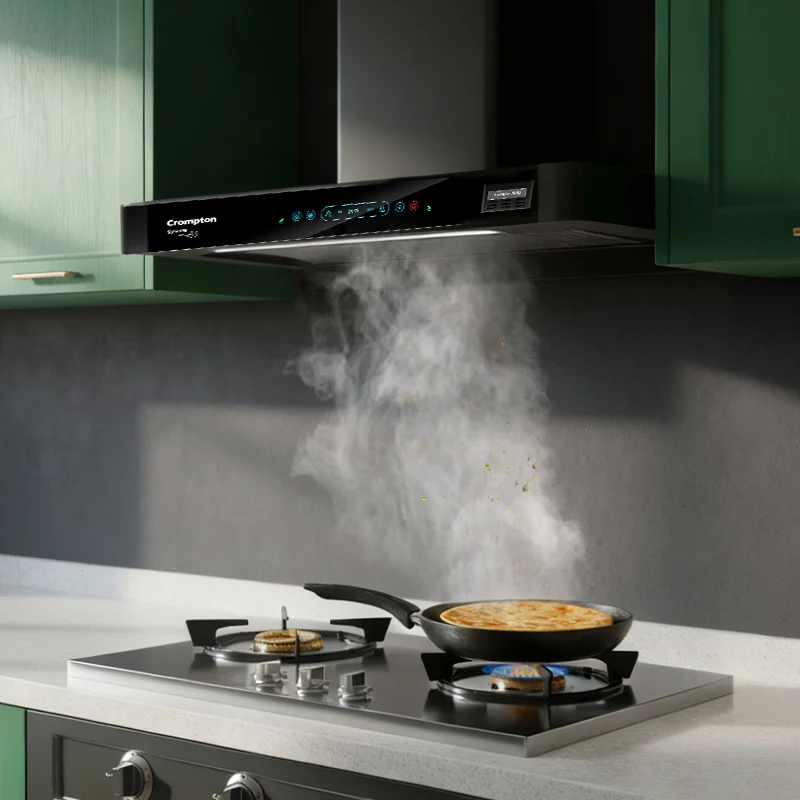
Install a smart, high-suction chimney:Models like Crompton’s filterless chimneys with best in class pwerful suction efficiently remove smoke and grease with minimal upkeep. You can go for the Sylvaire range with AQI led adaptive suction
-
Choose built-in appliances:Integrated hobs and chimneys save space and improve kitchen airflow.
-
Improve natural ventilation: Use exhaust fans or open windows for better air circulation.
-
Keep it clean:Empty the oil collector, wipe surfaces, and ensure the duct stays clear for consistent performance.
Use Crompton Appliances To Combat Kitchen Pollution
The kitchen is more than just where meals are made. It is a micro-environment that can significantly impact indoor air quality. When we ignore the dynamics of kitchen air pollution, we also ignore how often we breathe that air. Recognising the role of gas stoves and air quality, and taking proactive steps via high-quality kitchen appliances, equipped extraction (such as a reliable kitchen chimney) and well-designed layout are vital.
Recognising this, Crompton’s new Sylvaire range with AirIQ technology is designed to make kitchens healthier and smarter. With intelligent sensors and adaptive ventilation, it automatically detects changes in air quality and adjusts suction power to keep the air fresh. By combining advanced extraction, thoughtful design, and modern aesthetics, Crompton ensures your kitchen not only cooks well but breathes well too.
 Read Previous Blog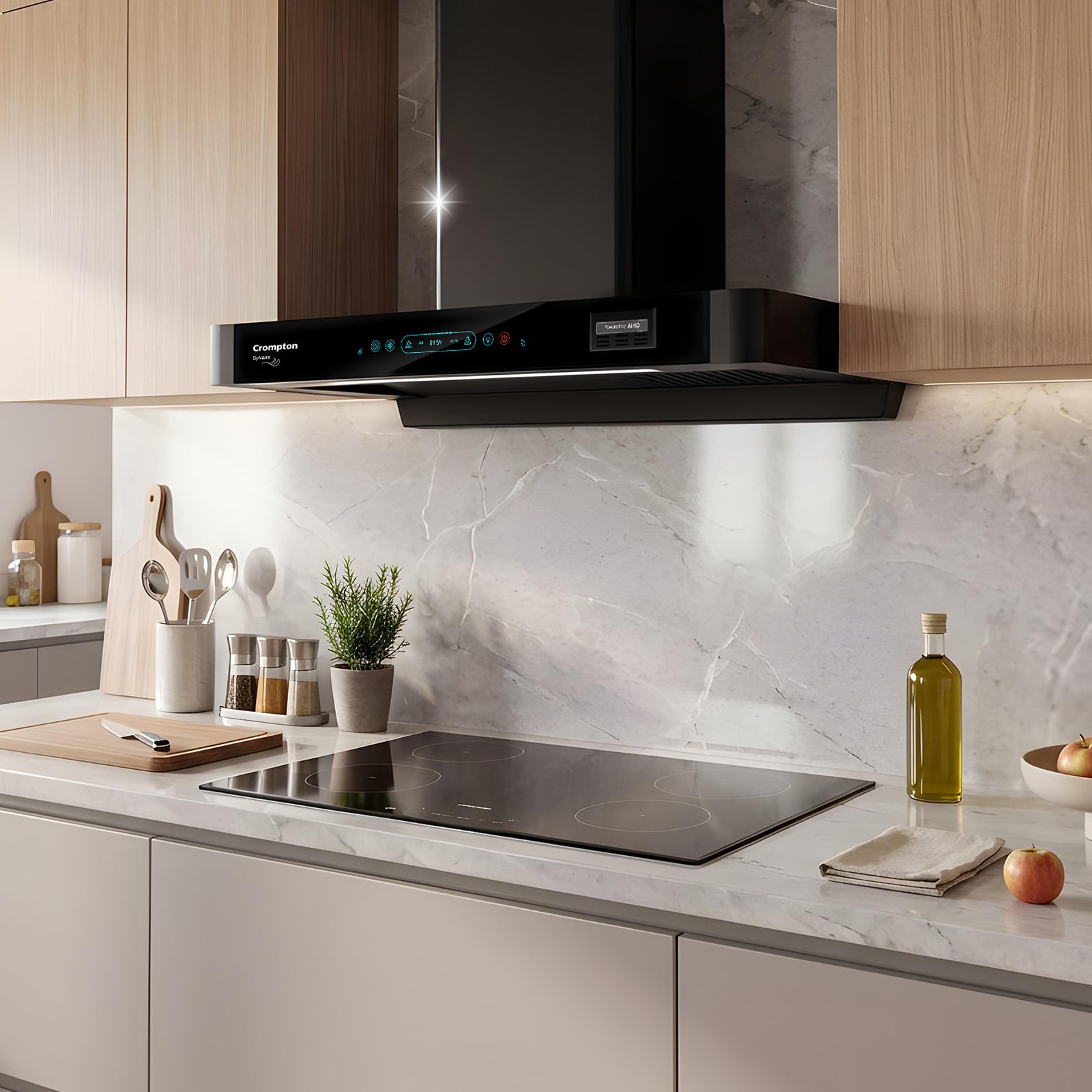



 at 9228880505 or write to us at
