


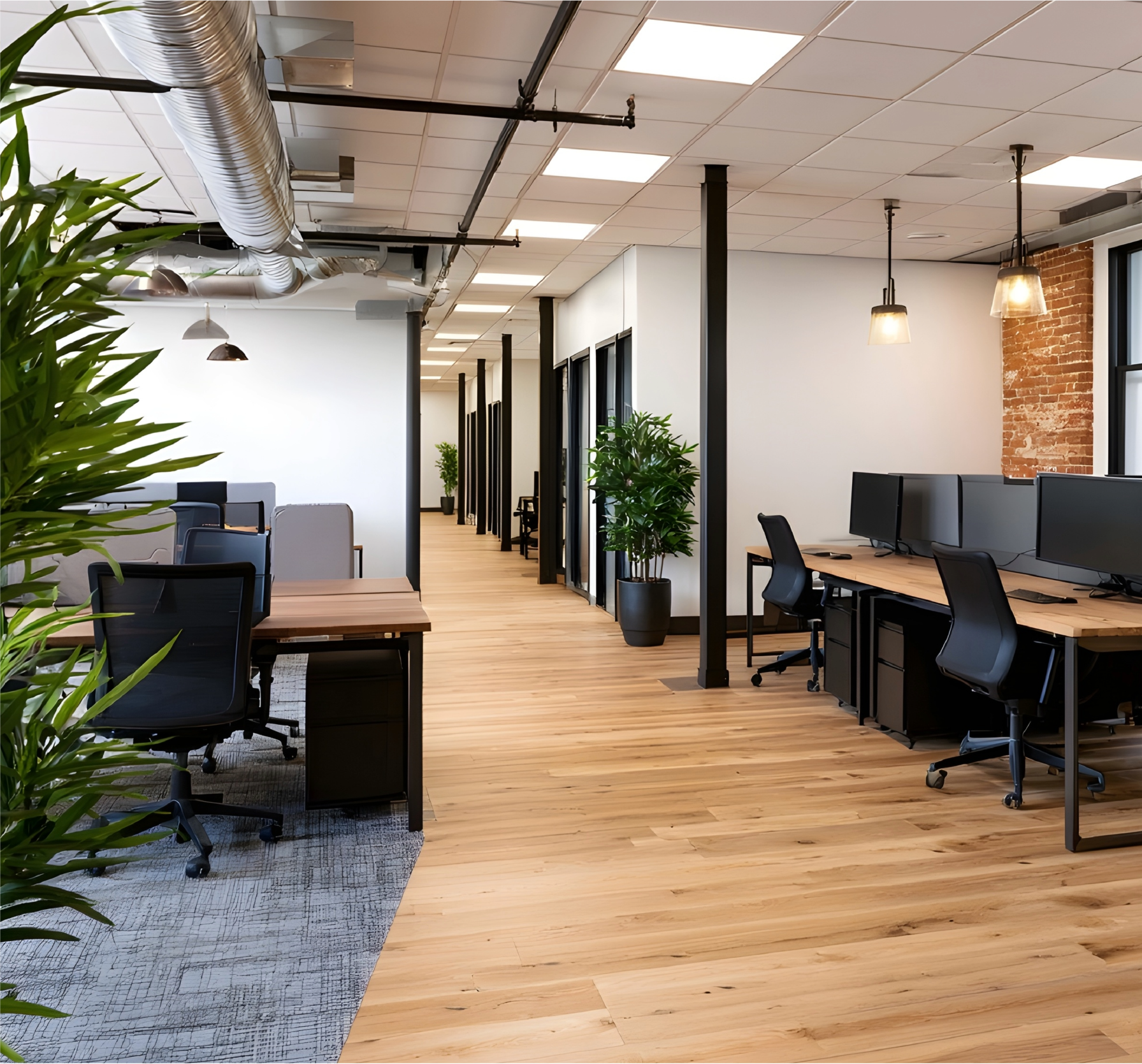
Why Is Energy-Efficient Commercial Lighting a Strategic Investment for Modern Buildings?
Lighting is one of the most essential systems in any commercial building. It affects how people work, how spaces look and feel, and how efficiently a building uses energy. With businesses increasingly focusing on sustainability, operational efficiency, and long-term cost savings, lighting has become more than just a functional requirement.
Modern lighting solutions, particularly energy-efficient LED systems, can help commercial buildings reduce electricity consumption, lower operating costs, improve occupant comfort, and support broader sustainability goals. This makes efficient lighting a practical investment rather than simply an environmental choice.
But why is energy-efficient commercial lighting a strategic investment for modern buildings? The answer lies in its ability to deliver benefits across energy performance, cost management, sustainability, and workplace efficiency.
Why Is Lighting Important for Sustainable Commercial Buildings?
One of the biggest factors influencing a building's energy consumption is its lighting system. Traditional lighting technologies can consume significant amounts of electricity, particularly in large offices, retail spaces, warehouses, hospitals, hotels, and industrial facilities where lights may operate for long hours.
This is why lighting is important for sustainable commercial buildings: choosing
energy-efficient systems can reduce unnecessary energy consumption while maintaining the required level of illumination.
LED lighting, for example, generally uses less energy than traditional incandescent and fluorescent lighting while offering a longer operating life. When combined with occupancy sensors, daylight controls, timers, and smart lighting systems, businesses can further optimise how and when lighting is used.
Efficient lighting therefore becomes an important part of a building's overall energy management strategy.
Key financial drivers:
- Reduced electricity bills: LEDs use 75% less energy than incandescent bulbs and 30-40% less than fluorescent fixtures
- Lower maintenance costs: LED bulbs last 25,000-50,000 hours versus 1,000 hours for traditional incandescent, meaning fewer replacements and labour hours
- Operational efficiency: Smart lighting systems with motion sensors, daylight harvesting, and zone controls optimise energy use by up to 30% beyond bulb efficiency alone
- Tax incentives and rebates: Government schemes and utility rebates offset 15-30% of implementation costs in most regions
Why Should Commercial Buildings Invest in Efficient Lighting Now?
The urgency lies in three factors: rising energy costs, stricter building codes, and measurable ROI timelines.
- Regulatory compliance is becoming mandatory. India's Energy Conservation Building Code (ECBC) mandates energy-efficient lighting for commercial buildings above 1,000 sq. ft. Buildings that upgrade proactively avoid future retrofitting costs and penalties
- Energy volatility makes predictable operating expenses valuable. Fixed-cost LED systems shield businesses from electricity price fluctuations, creating budget certainty for facility managers and CFOs
- Competitive advantage in leasing markets is real. Tenants and occupants increasingly prioritise sustainable lighting and wellness features. Energy-efficient buildings can become more attractive to tenants, particularly organisations with sustainability and ESG goals and attract corporate clients with ESG commitments
Health, Productivity, and Occupant Wellness
Why is efficient lighting important for building sustainability? Because lighting directly affects human performance, health, and well-being.
Productivity gains:
- Properly designed lighting can help reduce eye strain, glare, and visual discomfort, decrease headaches and fatigue
- Colour temperature-tuned LEDs (supporting circadian rhythms) improve focus and reduce errors
- Studies show 15-25% productivity gains in well-lit offices compared to poorly lit spaces
- Employee retention improves when workspaces prioritise wellness features
Health benefits:
- Human-centric lighting reduces eye discomfort and digital eye strain
- Tunable white LEDs support natural sleep-wake cycles, improving sleep quality
- Reduced flicker and glare create psychologically comfortable environments
- Lower heat output from LEDs improves thermal comfort in summer months
Environmental and ESG Credentials
Why is sustainable lighting essential for modern buildings? Because carbon footprint reduction directly impacts corporate ESG scores and brand value.
Environmental impact per building:
- Switching to LEDs reduces annual carbon emissions by 40-60 tons per 10,000 sq. ft. building (equivalent to planting 600-900 trees)
- Reduced demand on electrical grids decreases pressure on coal and fossil fuel generation
- Recyclable LED components and reduced waste streams support circular economy goals
Why is lighting important for sustainable commercial buildings? It's one of the highest-ROI sustainability investments. While solar installations require 8-12 years to break even, lighting efficiency achieves payback in 3-5 years while delivering equal or greater carbon savings.
Strategic Implementation: A Pointwise Approach Phase 1: Audit and Assessment
- Conduct an energy audit to baseline current consumption
- Map fixture types, age, and condition across all zones
- Identify priority areas (warehouses, 24/7 operations, high-occupancy spaces)
- Establish energy baselines for post-upgrade measurement
Phase 2: Technology Selection
- Install LED panels and fixtures rated for commercial duty cycles
- Integrate smart controls (motion sensors, daylight harvesting, zone scheduling)
- Select colour temperature appropriate for task
- Choose dimmable systems for flexibility and energy optimisation
Phase 3: Integration with Building Systems
- Connect to Building Management Systems (BMS) for centralised control
- Enable occupancy-based scheduling and demand response
- Integrate with HVAC for thermal load optimisation
- Set up IoT monitoring for real-time energy tracking
Phase 4: Measurement and Optimisation
- Track kWh consumption month-over-month
- Monitor productivity metrics (employee satisfaction surveys, output data)
- Adjust settings based on occupancy patterns and seasonal changes
- Document ROI for stakeholder reporting
Real-World Impact: Why Delayed Investment Costs More
Buildings postponing efficiency upgrades face compounding costs:
- Energy price increases of 3-5% annually to "deferred" buildings
- Ageing fixtures become unreliable, causing unexpected maintenance emergencies
- Competitive disadvantage as modern buildings attract premium tenants
- Regulatory penalties for non-compliance with building codes
- Staff turnover due to poor working conditions in outdated spaces
A building investing today avoids these cascading costs while capturing 3-5 years of energy savings.
The Strategic Advantage
Why is energy-efficient commercial lighting a strategic investment? Because it's the convergence of three business imperatives:
- Financial discipline: Fastest ROI among sustainability investments
- Operational excellence: Reduced maintenance, downtime, and emergency repairs
- Competitive positioning: Higher asset value, premium rental rates, tenant attraction, ESG credentials
Modern buildings aren't choosing energy-efficient lighting as an optional sustainability gesture; they're recognising it as essential infrastructure for competitive operations. Whether you manage corporate offices, retail spaces, warehouses, or industrial facilities, efficient lighting is no longer a cost centre but a strategic asset that can reduce operating costs, improve energy performance, support sustainability goals, and create more comfortable, efficient spaces. With the right audit, technology, and controls, lighting upgrades can deliver measurable long-term value.


