


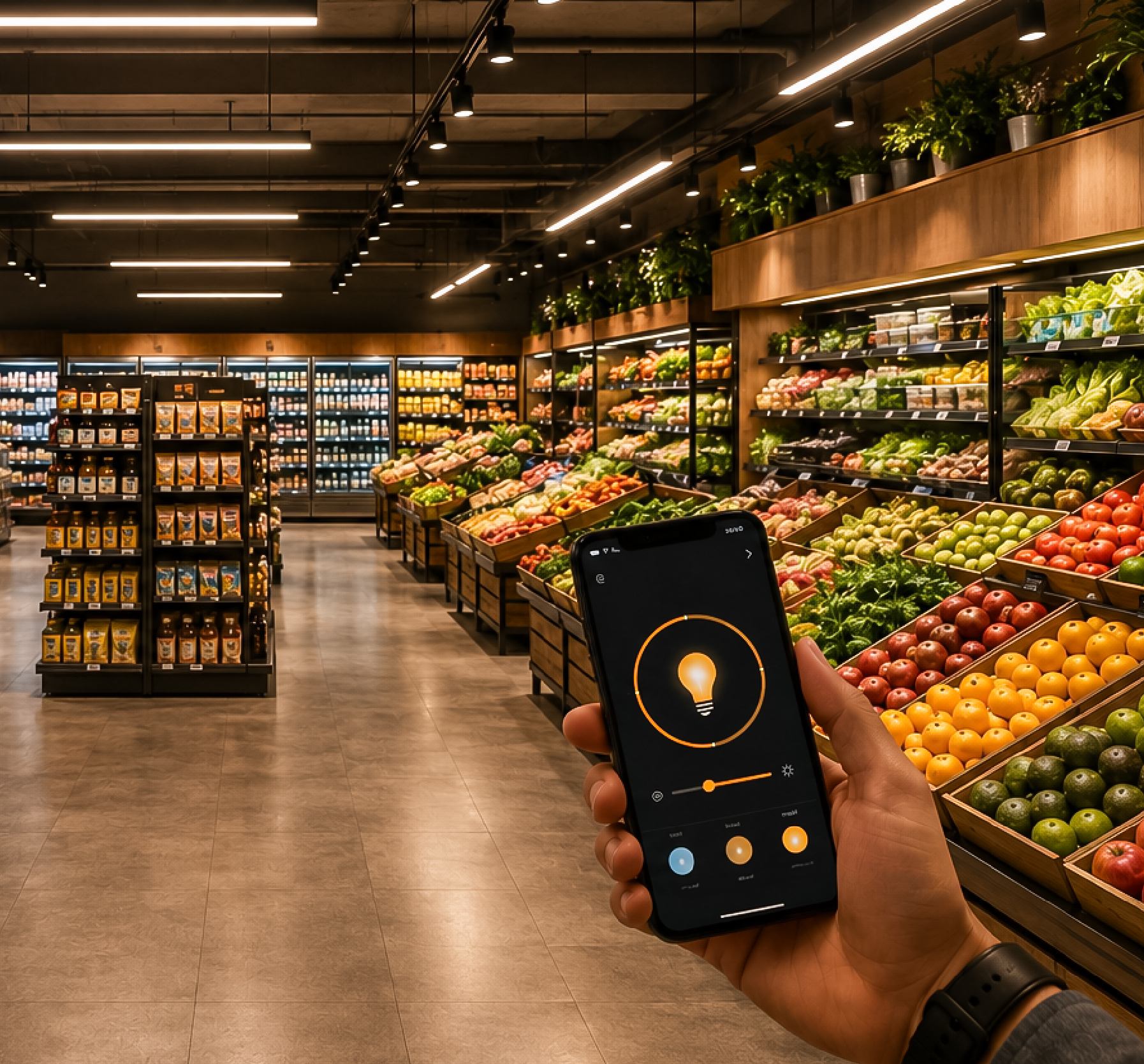
Future of Smart Commercial Buildings
Smart commercial buildings are transforming the way businesses operate by combining automation, connectivity, and data-driven intelligence to create efficient, comfortable, and sustainable workplaces. As organisations prioritise operational efficiency and employee
well-being, the demand for smart commercial building solutions continues to grow. Powered by IoT, AI, and intelligent lighting systems, these buildings optimise energy use, enhance occupant experiences, and simplify facility management. The Future of smart commercial buildings lies in creating adaptive spaces that respond to changing workplace needs while supporting long-term sustainability and business growth.
What Are Smart Commercial Buildings?
If you're wondering what is a smart commercial building, it is a workplace that uses interconnected technologies to automate and optimise building operations. These include lighting, HVAC, security, occupancy monitoring, and energy management, all integrated through centralised platforms.
Unlike conventional buildings, commercial smart buildings continuously collect and analyse data from sensors and connected devices. This enables real-time adjustments that improve occupant comfort, reduce operational costs, and simplify maintenance. Modern IoT-enabled commercial building systems ensure that building functions work together seamlessly, creating intelligent environments that are responsive, efficient, and future-ready.
Why Smart Commercial Buildings Are the Future of Workspaces?
Today's workplaces demand greater flexibility, sustainability, and efficiency. The future of smart buildings is centred around intelligent environments that adapt to occupants while minimising operational costs.
Key advantages include:
- Improved employee comfort through automated environmental controls.
- Better space utilisation using occupancy-based insights
- Reduced energy consumption with energy-efficient smart building technologies.
- Enhanced safety through integrated emergency and security systems
- Scalable infrastructure aligned with evolving commercial building automation trends
By combining digital intelligence with building infrastructure, smart workplaces become more productive, resilient, and sustainable
Role of Smart Lighting in Commercial Buildings
Lighting is one of the most impactful components of any smart building. Beyond illumination, smart lighting serves as a connected platform that enhances operational efficiency and occupant experience
Smart lighting enables:
- Occupancy-based automatic switching
- Daylight harvesting to maximise natural light
- Wireless dimming and scene control
- Energy monitoring and usage analytics
- Integration with connected building management systems
Together with intelligent lighting and HVAC for offices, smart lighting creates workspaces that are comfortable, adaptive, and significantly more energy efficient.
Key Technologies Powering Smart Commercial Buildings
Modern smart buildings rely on multiple integrated technologies, including:
- IoT sensors for occupancy, motion, daylight, and environmental monitoring
- Artificial Intelligence for predictive optimisation
- Cloud and edge computing for real-time processing.
- Building Management Systems (BMS) for centralised control
- Wireless communication protocols such as Bluetooth Mesh and DALI
- Smart emergency lighting systems
- Mobile applications for remote monitoring and control
- Energy analytics platforms for continuous optimisation
These smart building technology trends are driving the next generation of commercial infrastructure.
Smart Lighting Controls for Modern Commercial Spaces
Effective lighting controls improve comfort while reducing unnecessary energy usage. Modern solutions include:
- Occupancy sensing for automatic ON/OFF operation
- Daylight harvesting based on natural light availability
- Time scheduling for routine automation
- Wireless wall switches and dimmers
- Scene-based lighting presets
- Individual and group device control
- Remote monitoring through mobile applications
- Integration with BMS and fire alarm systems
These intelligent controls form the backbone of advanced commercial building automation systems.
Energy Efficiency in Smart Commercial Buildings
Energy optimisation is one of the biggest advantages of smart commercial buildings. Intelligent systems continuously monitor occupancy, daylight availability, and equipment performance to reduce unnecessary energy consumption. By integrating lighting, HVAC, and building controls, businesses can achieve measurable cost savings while improving occupant comfort. These energy-efficient smart building technologies also support predictive maintenance, minimising downtime and extending equipment life.
Key energy-saving features:
- Occupancy-based lighting and control
- Daylight harvesting to reduce artificial lighting
- Real-time energy monitoring and reporting
- Automated scheduling for lighting and equipment
- Predictive maintenance through connected devices
- Demand-based operation of building systems
Smart Commercial Buildings and ESG Goals
Environmental, Social, and Governance (ESG) objectives are becoming central to commercial infrastructure planning. Smart buildings contribute by reducing carbon emissions, improving occupant well-being, and providing measurable sustainability data. The Future of Commercial Smart Buildings will increasingly align with green building certifications and corporate sustainability initiatives through intelligent resource management.
How smart buildings support ESG:
- Lower electricity consumption and carbon footprint
- Improved indoor environmental quality
- Data-driven sustainability reporting
- Reduced maintenance waste through predictive analytics
- Efficient use of building resources and assets
Smart Building Applications Across Commercial Spaces
| Commercial Space | Smart Building Application | Primary Benefit |
| Corporate Offices | Intelligent lighting, occupancy sensing, HVAC automation | Higher employee productivity and comfort |
| IT Parks | Centralised building management | Lower operational costs |
| Retail Stores | Automated lighting scenes and energy management | Better customer experience |
| Hospitals | Smart emergency lighting and environmental monitoring | Enhanced safety and compliance |
| Hotels | Room automation and lighting controls | Improved guest comfort |
| Warehouses | Motion-based lighting and energy analytics | Reduced energy consumption |
| Educational Institutions | Scheduled lighting and occupancy management | Efficient facility operations |
Smart Lighting vs Conventional Commercial Lighting
| Smart Lighting | Conventional Lighting |
| Occupancy and daylight-based automation | Manual switching |
| Wireless control and scheduling | Fixed operation |
| Real-time energy monitoring | Limited energy insights |
| Remote monitoring through apps | On-site operation only |
| Easily integrates with BMS | Minimal system integration |
| Supports predictive maintenance | Reactive maintenance approach |
Benefits of Smart Lighting for Commercial Building Owners
- Lower electricity and operating costs
- Improved occupant comfort and workplace productivity
- Better asset utilisation through data analytics
- Reduced maintenance with predictive alerts
- Centralised monitoring and control
- Enhanced safety with smart emergency lighting.
- Scalability for future building expansion.
- Supports sustainability and ESG initiatives
- Enables smart building solutions for offices that adapt to changing workplace needs
Common Challenges in Smart Commercial Building Adoption
- Higher initial investment compared to traditional systems
- Integration with existing infrastructure can be complex
- Need for skilled commissioning and configuration
- Cybersecurity considerations for connected devices
- Employee training for effective system utilisation
- Selecting compatible hardware and software platforms
Despite these challenges, long-term savings and operational benefits typically outweigh the upfront investment.
How to Choose Smart Lighting Solutions for Commercial Buildings?
Step 1: Assess your building's operational requirements, occupancy patterns, and energy goals.
Step 2: Choose scalable commercial building automation systems that support future expansion.
Step 3: Prioritise wireless lighting controls and sensor-based automation.
Step 4: Ensure compatibility with existing Building Management Systems (BMS).
Step 5: Look for advanced analytics, reporting, and mobile-based management.
Step 6: Select solutions that support smart emergency lighting and regulatory compliance.
Step 7: Partner with an experienced lighting provider offering reliable after-sales support and future-ready technology aligned with smart building innovations 2026.
Crompton Smart Lighting Solutions for Commercial Buildings
Crompton's SensoRange SMART platform enables businesses to create intelligent, connected, and energy-efficient commercial spaces. Designed for offices, retail spaces, healthcare facilities, warehouses, hospitality, and industrial buildings, the platform combines intelligent lighting controls with centralised building management to improve efficiency, sustainability, and occupant comfort. It supports wireless automation, energy analytics, and seamless BMS integration, making it an ideal solution for modern smart commercial building solutions.
Key capabilities include:
- Wireless dimming and manual lighting control.
- Occupancy sensing and daylight harvesting.
- Time scheduling and automated lighting scenes.
- Energy, space, and device usage analytics.
- Mobile app for configuration, commissioning, and remote control.
- Smart emergency lighting with automated testing and monitoring.
- Seamless integration with 120+ Building Management Systems through the IRIS S On-Premise Solution.
Smart Commercial Building Lighting Checklist
- Install LED smart lighting throughout the facility
- Implement occupancy and daylight sensors
- Integrate lighting with HVAC and BMS
- Enable wireless scheduling and remote control
- Monitor energy usage through analytics
- Deploy smart emergency lighting
- Review occupancy and space utilisation reports regularly
- Choose scalable systems that support future upgrades
FAQs on Smart Commercial Buildings
Q. What is a smart commercial building?
A. A smart commercial building uses connected technologies, sensors, and automation to optimise lighting, HVAC, security, and energy management for improved operational efficiency and occupant comfort.
Q. What is the future of smart commercial buildings?
A. The future of smart buildings focuses on AI-driven automation, predictive maintenance, sustainability, and intelligent workplace experiences supported by connected technologies.
Q. How do smart buildings improve energy efficiency?
A. They automatically adjust lighting and HVAC based on occupancy, daylight, and usage patterns while providing real-time energy monitoring to reduce waste.
Q. What technologies are used in smart commercial buildings?
A. Common technologies include IoT sensors, AI, cloud computing, wireless controls, DALI lighting, Building Management Systems, and advanced analytics platforms.
Q. How does IoT help in smart building management?
A. IoT-enabled commercial building systems collect and share real-time data, enabling centralised monitoring, predictive maintenance, automation, and better decision-making.
Q. What are the benefits of smart commercial buildings for businesses?
A. They reduce operational costs, improve employee productivity, support sustainability goals, enhance safety, and simplify facility management.
Q. How can smart lighting improve commercial building performance?
A. Smart lighting optimises energy consumption, improves visual comfort, integrates with building systems, enables remote management, and provides actionable insights through data analytics.


