


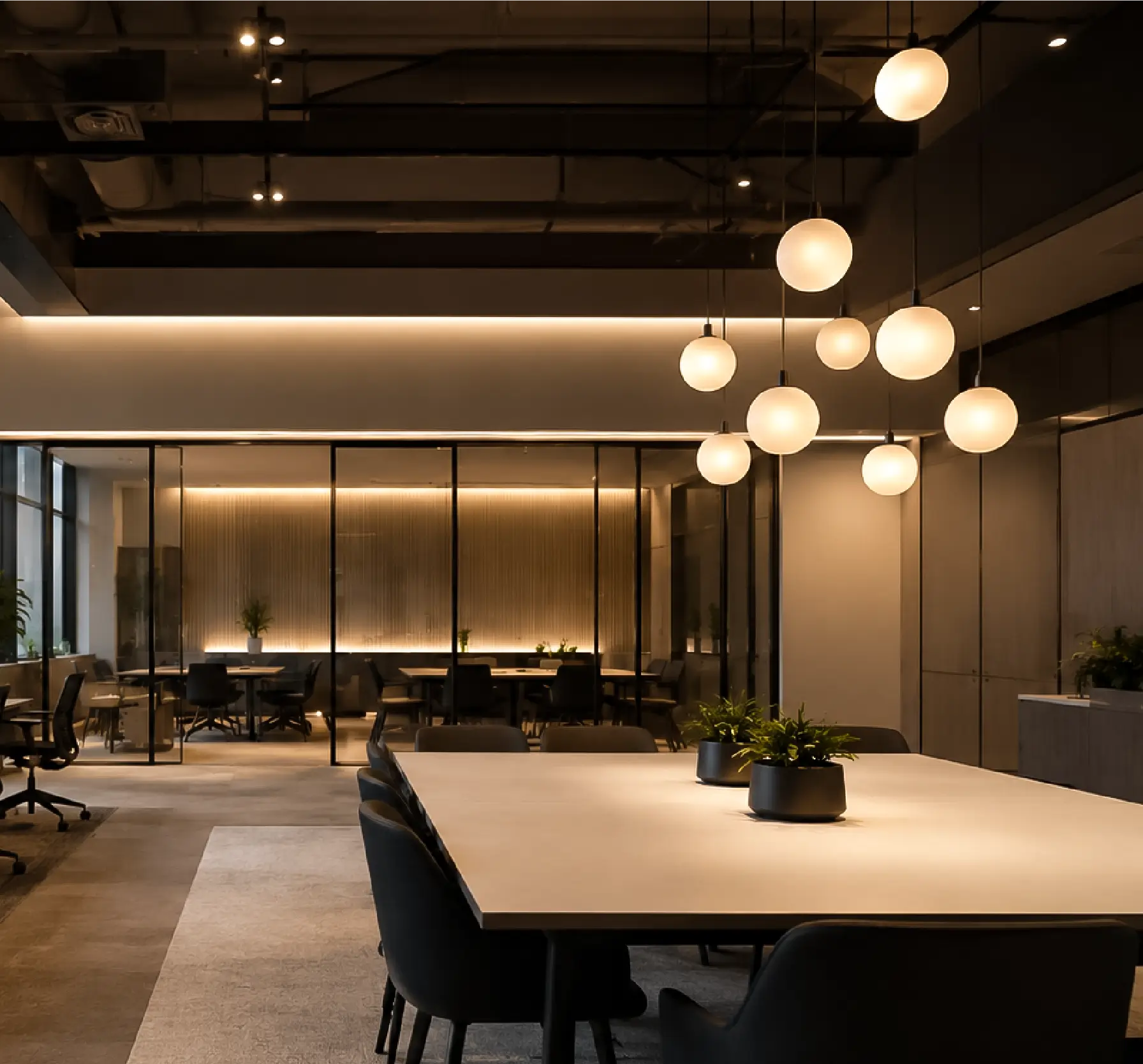
Modern Office Lighting Trends for 2026: From Minimalism to Statement Pieces
The way we light our workspaces has never been more important. Today's offices aren't just places to work, they're environments that shape how we feel, think, and perform. That's why modern office lighting trends 2026 have shifted dramatically from basic task lighting to thoughtful design choices that balance aesthetics, functionality, and employee well-being.
Whether you're designing a sleek minimalist space or creating bold statement areas with pendant lighting for offices, the right illumination can transform your workspace into something truly special. In this guide, we'll explore the most exciting office lighting trends 2026, from understated elegance to dramatic architectural installations that make workspaces memorable.
What Is Modern Office Lighting in 2026?
Modern office lighting in 2026 goes far beyond switching on a light to see your desk clearly. It's about creating layered lighting systems that adapt to different tasks, moods, and times of day. Rather than relying solely on harsh overhead fluorescents, today's offices embrace a mix of ambient, task, and accent lighting that work together seamlessly.
Modern office lighting design now incorporates smart controls, energy efficiency, and biophilic principles that connect people to natural light rhythms. It's about understanding that employees spend hours in these spaces, and poor lighting can lead to fatigue, headaches, and reduced productivity. The best modern office lighting ideas recognize this reality and create environments where people actually enjoy working. From warm pendant clusters overhead to subtle architectural wall washers, every fixture has a purpose beyond just visibility.
Why Office Lighting Design Matters for Modern Workspaces?
Lighting isn't a decorative afterthought; it's foundational to how your office functions. Here's why
modern workplace lighting solutions deserve serious attention:
- Boosts Productivity: Proper lighting reduces eye strain and keeps employees alert. Studies show that well-lit offices increase productivity by up to 25%
- Improves Mental Health: Exposure to quality light helps regulate circadian rhythms, reducing fatigue and supporting better sleep patterns
- Enhances Brand Image: When clients or candidates walk into a beautifully lit office, they immediately perceive professionalism and attention to detail
- Reduces Energy Costs: Smart lighting and efficient fixtures lower utility bills while maintaining exceptional visual quality
- Creates Atmosphere: Whether you want calm, focused, or energised spaces, lighting sets the emotional tone of your office
The shift toward commercial office lighting solutions that prioritise employee wellness reflects a broader understanding: lighting is not an operational expense, it's an investment in your team's success.
Trend 1: Minimalist Lighting for Clean Office Interiors
Less is more in 2026. Minimalist office lighting ideas emphasise clean lines, uncluttered spaces, and fixtures that fade into the background rather than demanding attention. This isn't about darkness or sparse lighting; it's about strategic placement and restraint.
Think sleek linear profiles, hidden mounting systems, and neutral-toned fixtures that complement rather than dominate. Minimalist approaches typically feature:
- Recessed and flush fixtures that create seamless ceiling planes
- Dimmable LED systems allow subtle intensity adjustments throughout the day
- Neutral colour temperatures that feel natural without being harsh
- Minimal visual clutter with cable management and concealed wiring
This trend appeals to companies prioritising clean aesthetics and employee focus. A minimalist-lit office communicates intentionality, sophistication, and respect for employees' visual comfort.
Trend 2: Pendant Lighting as a Functional Design Element
Pendant lighting for offices has evolved into something far more sophisticated than decorative hanging fixtures. Today's office pendants combine stunning design with serious functionality.
They're architectural elements that define spaces, create visual interest, and actually improve how light reaches work surfaces.
What makes the latest modern office lighting innovations exciting is how pendants now serve multiple purposes:
- Zoning: Pendants help define different functional areas without walls
- Focused Task Lighting: Positioned over desks or meeting tables, they provide concentrated light exactly where needed
- Design Statement: Contemporary pendants come in materials from matte black steel to natural wood, adding personality to corporate spaces
- Flexible Heights: Adjustable suspension lengths allow customisation for different ceiling heights and visual effects
Modern offices use pendants not just for aesthetics but as strategic lighting infrastructure that genuinely improves workspace functionality and visual hierarchy.
Trend 3: Pendant Cluster Formations for Statement Office Spaces
Here's where modern office lighting trends 2026 get exciting. Cluster pendant office lights represent a bold shift from uniform, symmetrical lighting to organic, artistic arrangements that spark conversation and creativity.
Picture a conference room where seven pendants in varying heights and finishes hang together in an asymmetrical cluster. It's functional, stunning, and immediately communicates that this isn't a typical corporate space. Cluster formations work brilliantly because they:
- Create Visual Drama: Multiple pendants grouped create focal points that elevate interior design instantly
- Distribute Light Efficiently: Clustered positioning eliminates shadows while providing comprehensive coverage
- Offer Design Flexibility: Different finishes, sizes, and styles can be mixed within clusters for cohesive yet interesting arrangements
- Define Collaboration Zones: Clusters naturally draw people together, perfect for meeting areas, breakrooms, and open collaboration spaces
The beauty of this approach is that it feels intentional and curated rather than random. Each pendant contributes to an overall composition that enhances the entire office aesthetic while delivering superior lighting performance.
Trend 4: Architectural Lighting for Brand-Led Office Design
Architectural office lighting solutions represent the cutting edge of commercial office lighting innovations. This approach uses light itself as an architectural material, washing walls, highlighting textures, and creating ambience through strategic placement rather than visible fixtures.
Architectural lighting creates:
- Visual Depth: Wall-washing techniques add dimension, making spaces feel larger and more sophisticated
- Brand Expression: Colored accent lighting can reinforce brand identity and office personality
- Layered Ambience: Multiple fixture types create depth, allowing different moods for different times or activities
- Dramatic Effects: Uplighting, crosslighting, and grazing techniques create stunning visual narratives
Imagine a feature wall with subtle architectural uplighting that highlights natural textures, or a corridor where wall-washers create changing colour temperatures throughout the day. This
approach transforms lighting from functional to experiential; employees actually notice and appreciate how thoughtfully their environment is designed.
Trend 5: Human-Centric Lighting for Employee Comfort
Energy-efficient office lighting design now prioritises human circadian biology.
Human-centric or tunable lighting adjusts colour temperature and intensity throughout the day, mimicking natural light patterns that keep people alert and energised.
During morning hours, lights lean cooler (4500-5500K) to boost alertness. As the afternoon approaches, they warm slightly, and by evening, they shift toward warm (3000K) to support healthy sleep. This biodynamic approach delivers:
- Better Focus: Cooler morning light keeps employees mentally sharp
- Reduced Eye Strain: Appropriate intensity variations prevent fatigue
- Improved Wellbeing: Alignment with natural circadian rhythms supports overall health
- Higher Engagement: Employees feel genuinely better in spaces designed around their biological needs
This represents a fundamental shift in how offices think about lighting, not as something employees endure, but as something actively supporting their best performance and wellbeing.
Trend 6: Smart Lighting Controls for Flexible Offices
Smart lighting systems have become essential in modern workplace lighting solutions. Rather than fixed brightness and colour, smart controls let individual employees or zones adjust lighting to personal preferences and task requirements.
Modern smart systems enable:
- Individual Control: Desk-level lighting apps let employees adjust their specific zones
- Occupancy Sensing: Lights automatically adjust based on room usage and daylight availability
- Scheduling Flexibility: Automated transitions between activity types (focused work vs. collaboration)
- Data Insights: Analytics show which areas receive heavy use, informing future designs
- Integration Capabilities: Connected systems work seamlessly with HVAC and security for holistic office management
The smartest offices recognise that one-size-fits-all lighting doesn't work. Flexibility and individual control actually make employees happier and more productive.
Pendant Lighting vs Architectural Lighting for Offices
| Aspect | Pendant Lighting | Architectural Lighting |
| Visibility | Visible, design-focused fixtures | Mostly hidden, fixtures not prominent |
| Primary Function | Task lighting with visual design | Ambience, surface highlighting, and drama |
| Installation | Typically suspended, straightforward | Embedded in ceilings or walls, more complex |
| Cost Range | Moderate to high | High (requires planning integration) |
| Best For | Conference tables, casual seating, and entry areas | Feature walls, brand expression, and corridors |
| Flexibility | Easy to relocate or adjust | Permanent, requires renovation to change |
| Design Impact | Immediate, obvious statement | Subtle, sophisticated, discovered gradually |
| Maintenance | Accessible, simple upkeep | More specialized service requirements |
Best Office Areas for Pendant, Cluster and Architectural Lighting
| Office Area | Ideal Lighting Type | Why It Works |
| Reception/Entry | Pendant clusters or statement pieces | Creates an immediate impression and sets the office tone. |
| Conference Rooms | Clustered pendants with architectural accents | Creates dramatic backdrops for important meetings. |
| Open Workspace | Mix of architectural and minimal pendants | Provides even light distribution without visual monotony. |
| Breakrooms | Warm pendant fixtures in clusters | Creates a relaxed, welcoming atmosphere that encourages connection. |
| Executive Offices | Architectural uplighting with minimal pendants | Delivers a sophisticated, dignified environment focused on work. |
| Collaboration Zones | Pendant clusters defining boundaries | Provides visual organisation without walls while remaining approachable. |
| Hallways/Corridors | Architectural wall-washing with coloured accents | Creates a visual journey and supports brand storytelling. |
| Focus/Quiet Areas | Minimal design, warm tones, dimmable lighting | Supports concentration without distraction. |
How to Choose the Right Office Lighting Trend for Your Workspace?
Selecting the perfect modern office lighting design requires understanding your specific needs:
Step 1: Audit Your Current Space
Walk through your office at different times. Where does natural light enter? Where are the shadows? Which areas feel energising, and which feel draining? This inventory reveals your lighting gaps.
Step 2: Define Your Office Personality
Do you want minimalist and serene, creative and bold, or professional and traditional? Your lighting should match your brand and company culture. A creative agency might embrace dramatic pendant clusters, while a law firm might prefer elegant minimalism.
Step 3: Identify Functional Zones
Map out areas by purpose: focused work, collaboration, client-facing, and relaxation. Each deserves different lighting strategies. Meeting spaces benefit from dramatic pendant clusters, while individual workstations need task-focused lighting.
Step 4: Evaluate Energy and Budget
LED technology has made energy-efficient options affordable. Determine your budget and prioritise areas with the highest employee density. It's better to fully outfit your main spaces than partially update everything.
Step 5: Plan Flexibility
Choose systems that evolve with your needs. Smart controls and modern mounting systems should allow adjustments without major renovations.
Step 6: Consult Professionals
Lighting design is nuanced. Work with professionals who understand office dynamics, energy efficiency, and the psychological impacts of light. Their expertise pays dividends in employee satisfaction and operational efficiency.
Common Office Lighting Mistakes to Avoid in 2026
Even thoughtful office designers sometimes stumble. Here are pitfalls to sidestep:
- Overlighting: More light doesn't mean better. Excessive brightness causes glare, eye strain, and actually reduces productivity
- Uniform Intensity Everywhere: Offices need variation. Different areas should have different light levels appropriate to their function
- Ignoring Daylight: Windows are powerful allies. Exterior blinds or sheer treatments maximise natural light while reducing glare
- Static Colour Temperature: Warm light energises morning focus; cool light supports alertness. Dynamic systems beat one-temperature-fits-all approaches
- Visible Wiring and Fixtures: Even beautiful fixtures look sloppy without proper installation and concealed wiring
- Forgetting About Shadows: Pendant placement creates shadows. Consider how overhead fixtures will interact with vertical task lighting
- Neglecting Maintenance Plans: Beautiful fixtures require upkeep. Dusty pendants and discoloured walls undermine your design investment
- Installing Without Controls: The most beautiful lighting system fails if occupants can't adjust it. Smart controls are worth the investment
Crompton Office Lighting Solutions for Modern Workspaces
For offices ready to implement modern office lighting trends 2026, quality fixtures matter tremendously. Crompton offers comprehensive solutions designed for contemporary workspaces:
- Smart Pendant Systems: Modern geometries with integrated dimming and colour control options
- Architectural Lighting Profiles: Hidden fixtures for wall-washing and accent lighting effects
- Energy-Efficient LED Arrays: Complete lumens without the energy consumption or heat
- Tunable White Systems: Automated colour temperature adjustments supporting circadian wellness
- Integrated Controls: App-based management letting employees customise their lighting environment
- Sustainable Options: Recycled materials and minimal waste manufacturing for environmentally conscious offices
Crompton understands that commercial office lighting solutions must balance beauty, functionality, and efficiency with no compromises. Their products have earned trust from corporations managing thousands of employees who spend hours under these lights daily.
Office Lighting Design Checklist for Modern Workspaces
Before finalising your lighting design, verify you've addressed these essentials:
- Layered Lighting: A combination of ambient, task, and accent lighting throughout
- Adequate Brightness: Minimum 300-500 lux for office work, appropriate to specific tasks
- Colour Temperature Flexibility: Ability to adjust from warm (3000K) to cool (5000K+) as needed
- Glare Management: Anti-glare measures on screens, indirect light positioning, and diffusers where necessary
- Individual Control: Occupants can adjust lighting in their immediate work area
- Natural Light Integration: Maximised daylight with glare reduction strategies
- Energy Efficiency: LED technology throughout with efficient fixtures (80+ lumens per watt)
- Accessibility: Emergency lighting, appropriate signage, and safety considerations
- Maintenance Planning: Clear protocols for cleaning, bulb replacement, and system updates
- Brand Alignment: Design choices reinforce company identity and office culture
- Future Flexibility: Systems accommodate reorganisation without major renovation
- Occupant Satisfaction: Feedback mechanisms ensuring employees are happy with the final result
FAQs on Modern Office Lighting Trends for 2026
Q. What are the top office lighting trends for 2026?
A: Leading trends include pendant lighting for offices, minimalist office lighting ideas, cluster pendant office lights creating bold statements, and smart control systems.
Energy-efficient office lighting design with tunable colours supporting employee well-being is essential. These reflect a shift from purely functional to holistic systems, enhancing productivity and comfort.
Q. How is pendant lighting changing modern office design?
A: Pendant lighting for offices has evolved into strategic design elements providing focused task lighting and defining spaces without walls. Modern pendants in diverse materials express
personality and brand identity, while clusters improve light distribution and create visual drama, central to modern office lighting trends 2026.
Q. Why are minimalist lighting designs popular in offices?
A: Minimalist approaches reduce visual chaos, support concentration, and communicate sophistication. Minimalist office lighting ideas work especially well in smaller spaces and age gracefully without feeling trendy, providing design flexibility as office needs evolve.
Q. What are pendant cluster lights, and where are they used?
A: Cluster pendant office lights are multiple fixtures in organic, asymmetrical arrangements, typically 5-7 pieces varying in height and finish. They excel in conference rooms, receptions, breakrooms, and collaboration zones, providing excellent distribution while defining spaces without walls.
Q. How does architectural lighting improve office interiors?
A: Architectural office lighting solutions use light as design material through wall-washing, uplighting, and grazing techniques. These invisible fixtures create ambience and brand expression, elevating workspace professionalism and intentionality through curated visual experiences.
Q. What is the best lighting design for modern workspaces?
A: Combine energy-efficient office lighting design, task lighting, accent fixtures, and smart controls. Layer ambient, task, and accent needs while incorporating flexibility, natural light, and circadian biology considerations for intuitive, functional environments.
Q. How can office lighting balance aesthetics, comfort and productivity?
A: Effective modern office lighting design addresses all three simultaneously. Beautiful fixtures enhance brand, comfort reduces eye strain and glare, while productivity-focused brightness and colour temperature support work. Smart systems let occupants customise their balance.


