


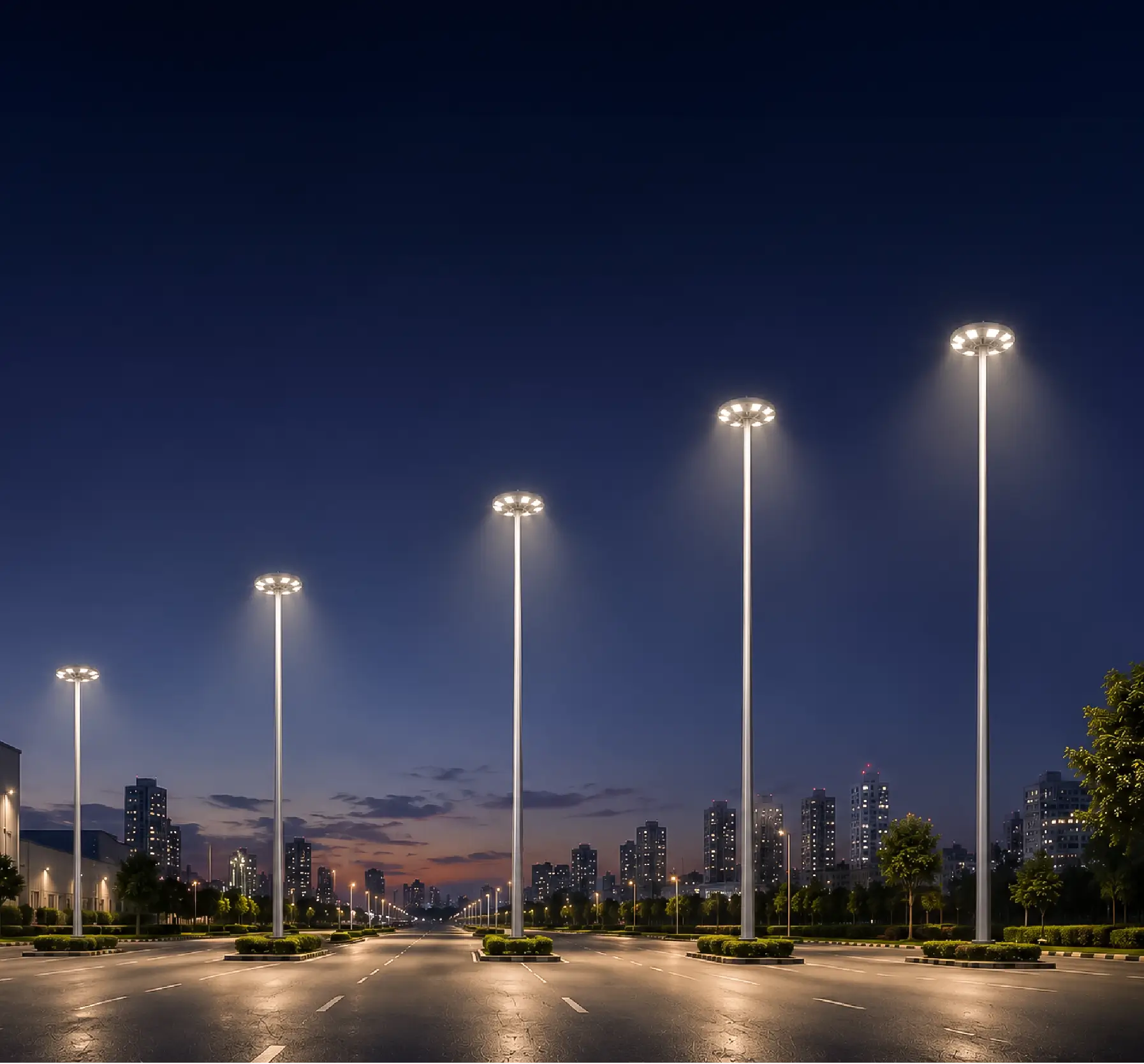
Understanding High Mast Heights: 15m, 20m, 25m, 30m & Beyond
When you need to light up a large area, a parking lot, sports field, industrial yard, or shipping facility, ordinary pole-mounted lights just won't cut it. That's where High Mast Heights come in. These towering structures, ranging from 15 meters to 30 meters and beyond, illuminate massive spaces efficiently. But choosing the right height isn't simple. The wrong choice means wasted money on over-lighting or under-lit areas where safety suffers. This guide walks you through types of High Mast Heights, explains how to choose the right high mast height for your specific needs, and shows you what to expect in terms of cost, coverage, and installation. Let's break down this important decision into something straightforward and practical.
What Is High Mast Lighting Height?
High mast lighting height refers to the vertical distance from the ground to the light source on a tall pole. Instead of spreading lights across many shorter poles, high mast pole height concentrates powerful lighting fixtures on fewer, taller structures. Think of it like using one powerful flashlight from far away versus several weaker flashlights close up; you get better coverage with fewer obstructions.
High mast lighting excels at covering large areas with uniform brightness. The height determines how wide the light spreads and how evenly it is distributed. A 15-meter mast covers one area; a 30-meter mast covers something much larger. The relationship between height, lamp power, and beam angle (the angle the light spreads) determines whether your lighting solution works brilliantly or falls short. Understanding this relationship helps you choose the right setup without overspending or creating dark spots.
Why High Mast Height Selection Matters
Getting the height right directly affects your project's success and costs. Here's why this choice matters more than people realise:
- Safety and Visibility: Too short and some areas remain dark; too tall and light becomes inefficient. The right height ensures complete, even coverage
- Energy Efficiency: A 25m mast with the right fixtures might use less energy than three 12m poles. Height affects how efficiently light reaches the ground
- Installation Costs: Taller masts require stronger materials, deeper foundations, and specialised equipment. Height choices significantly impact the initial high mast lighting cost
- Maintenance Accessibility: Extremely tall masts require specialised climbing equipment and training. Practical height reduces long-term maintenance expenses
- Wind Resistance: Taller structures face greater wind loads, requiring reinforced poles and engineering. This affects structural costs
- Future Flexibility: Choosing the right height from the start prevents expensive retrofits when your space needs change
Getting this decision right means your lighting system serves you well for 10-15 years without major modifications.
Common High Mast Heights: 15m, 20m, 25m, 30m and Beyond
| Mast Height (m) | Approx. Coverage Area (sq meters) | Best For | Typical Fixture Count | Power Per Fixture (W) |
|---|---|---|---|---|
| 15m | 2,000–3,000 | Small parking lots, tennis courts, and loading areas | 4–6 | 400–600 |
| 20m | 3,500–5,000 | Medium parking facilities, smaller sports fields | 6–8 | 600–1,000 |
| 25m | 5,000–7,000 | Large parking complexes, golf driving ranges, and highway interchanges | 8–10 | 1,000–1,500 |
| 30m | 7,000–10,000 | Major industrial yards, large sports facilities, and port areas | 10–12 | 1,500–2,000 |
| 35m+ | 10,000+ | Airport runways, major shipping terminals, and large manufacturing plants | 12+ | 2,000+ |
Each height represents a practical solution for different-sized spaces. The jump from 15m to 20m isn't just 5 meters; it's a significant increase in coverage area and light distribution. That's why choosing wisely between 15m, 20m, 25m, and 30m high mast lighting options matters.
How to Choose the Right High Mast Height for Your Project
Selecting the correct high mast height selection criteria doesn't require guesswork. Follow these practical steps:
Step 1: Measure Your Space Accurately: Get exact dimensions of the area you need to light. Include length, width, and note any obstacles like trees or buildings that block light. A 50-meter parking lot needs different consideration than a 150-meter facility.
Step 2: Understand Your Lighting Requirements: Different spaces need different brightness levels. A parking lot needs 10-20 lux (a measurement of brightness). A sports field needs 200-500 lux, depending on the sport. An industrial yard might need 30-50 lux. Know your requirement before choosing height.
Step 3: Evaluate Mast Placement Options: Can you place masts in corners or along edges? Peripheral placement covers space more efficiently than a single central mast. Your layout affects whether a 20m mast suffices or you need 25m.
Step 4: Calculate Coverage Patterns: Work with lighting specialists to create a coverage map. This shows how light spreads at different heights with your specific fixtures. You'll see exactly where dark spots appear and whether adjustment is needed.
Step 5: Consider Long-Term Needs: Will your space expand? Plan height accordingly. Upgrading fixtures on an existing mast is cheaper than adding a new mast later.
Step 6: Balance Height with Cost: Taller isn't always better. A 25m mast might be overkill for a small space and wasteful of energy. A 15m mast might leave corners dark. Find the practical sweet spot for your specific situation.
Coverage Patterns by High Mast Height
| Height | Light Spread Angle | Coverage Diameter | Lighting Uniformity | Practical Limitations |
|---|---|---|---|---|
| 15m | 60–90° | 20–30 meters | Good (nearby areas well-lit) | Dark perimeters if placed centrally |
| 20m | 55–80° | 30–40 meters | Good | Acceptable for medium spaces; edges need attention |
| 25m | 50–75° | 35–50 meters | Very Good | Large enough for most industrial applications |
| 30m | 50–70° | 40–60 meters | Excellent | Requires precise fixture positioning |
| 35m+ | 50–65° | 50+ meters | Excellent | Needs professional design; wind considerations critical |
These patterns show why coverage patterns for high mast lights vary so much at different heights. A 30m mast with 12 fixtures can achieve what requires 18-20 fixtures on 15m poles. That's why height selection affects long-term operating costs significantly.
Relationship Between Mast Height, Beam Angle and Light Distribution
Height is only part of the story. How the light spreads, the beam angle matters equally. Here's what you need to know:
- Wide Beam Angles (70-90°): Light spreads broadly, covering wider areas but with less intensity. Good for parking lots where uniform coverage matters more than brightness
- Narrow Beam Angles (40-60°): Light concentrates downward with greater intensity. Ideal for tall masts where you want light focused on the ground, not wasted in the sky
- Height and Beam Interaction: A 20m mast with a narrow beam might light the same area as a 15m mast with a wide beam, but the light distribution differs. The taller mast creates more uniform coverage
The best high mast lighting coverage area results from matching beam angle to mast height and space dimensions. This is why professional lighting designers earn their fees; getting this combination right ensures efficient, effective results.
Best Applications for 15m High Mast Lighting
15m high mast poles work beautifully for modest-sized projects. They're the practical entry point for large-area lighting, offering significant advantages over multiple shorter poles without requiring specialised equipment or extreme wind engineering.
Perfect applications include:
- Small to Medium Parking Lots: 2,000-3,000 square meters with 4-6 vehicles parked overnight
- Tennis Courts and Basketball Courts: Provides even lighting across playing surfaces
- Small Loading and Delivery Areas: Warehouses and distribution centres with limited outdoor work zones
- Fuel Station Forecourts: Adequate brightness for safe fuel dispensing
- Small Recreational Fields: Baseball or soccer practice areas
Best Applications for 20m and 25m High Mast Lighting
20m and 25m heights represent the sweet spot for most industrial and commercial applications. They offer significant advantages in coverage efficiency while remaining practical to maintain and install.
These heights excel at:
- Large Parking Facilities: 500-800 parking spaces with multiple rows
- Golf Driving Ranges: Full-field illumination for nighttime practice
- Highway Interchanges and Toll Plazas: Bright, uniform coverage for traffic safety
- Industrial Yards and Material Storage Areas: Warehouses with outdoor equipment and inventory
- Port and Shipping Facilities: Container storage and loading zones
- Sports Fields: Football, cricket, or hockey fields requiring consistent brightness
A 25m high mast typically covers 5,000-7,000 square meters efficiently, making it cost-effective for larger spaces. The jump from 20m to 25m adds only 20-30% to installation cost while increasing coverage by 40-50%. That's why 25m is so popular.
Best Applications for 30m and Higher High Mast Lighting
30m and taller masts serve major infrastructure projects. These aren't casual decisions—they require serious engineering and investment. But for the right applications, they're necessary.
These heights suit:
- Major Shipping Ports: Container terminals and cargo handling areas spanning 1-2 acres
- Airport Areas: Runway approaches, taxiways, and apron areas
- Large Manufacturing Plants: Facilities with outdoor assembly or material handling
- Major Event Venues: Large parking areas serving stadiums or convention centres
- Highway Rest Areas and Service Stations: Extended areas serving long-distance travellers
- Railway Yards and Logistics Hubs: Switching areas, loading platforms, and maintenance zones
Wind Load Considerations for High Mast Lighting
Here's something many people overlook: wind load considerations for high mast poles directly affect structural requirements and cost. Taller poles catch more wind, requiring stronger materials.
Key wind considerations:
- Regional Wind Speeds: Coastal areas and exposed locations require heavier-duty poles. A 25m pole in calm, inland regions differs significantly from one in hurricane or monsoon zones
- Pole Material: Standard steel poles work for most applications. Severe wind zones require reinforced designs or specialised alloys
- Foundation Depth: Wind load requires deeper, more substantial foundations. A 25m mast in a windy coastal area might need a 1.5-meter-deep foundation versus 1-meter inland
- Fixture Weight and Spread: More fixtures and wider spreads catch more wind. Design accounts for both mast and fixture loads
- Regular Inspections: High wind areas require periodic foundation and pole inspections to ensure structural integrity
Wind engineering adds 15-25% to costs in exposed locations. Proper design prevents catastrophic failures that endanger people and property.
Common Mistakes to Avoid When Selecting High Mast Heights
Even experienced projects sometimes stumble with high mast height selection. Avoid these costly errors:
- Oversizing Out of Caution: Choosing 30m when 25m suffices wastes on unnecessary height and ongoing energy costs
- Undersizing to Save Money: Picking 20m when 25m is really needed means dark corners, safety complaints, and likely eventual retrofit costs
- Ignoring Local Wind Codes: Failing to account for regional wind requirements causes engineering delays, redesigns, and expensive rework
- Poor Foundation Planning: Shallow foundations on tall masts invite problems. Invest in proper foundation engineering upfront
- Mismatching Fixtures to Height: Very bright fixtures on short masts create glare; dim fixtures on tall masts leave areas dark. Match fixture output to height
- Forgetting Maintenance Access: Some sites choose heights, making routine maintenance impossible without expensive equipment rental
- No Contingency for Future Growth: Rigid designs prevent easy adjustment if your facility expands
Crompton High Mast Lighting Solutions for Large-Area Projects
For industrial high mast light planning and large-area projects, quality matters tremendously. Crompton offers specialised solutions designed specifically for demanding applications:
- Customizable Height Options: 15m through 40m+ designs tailored to your specific space and requirements
- High-Performance Fixtures: Powerful, efficient LED options providing excellent coverage with minimal energy consumption
- Wind-Engineered Poles: Designs meeting stringent regional wind and seismic requirements across different geographies
- Smart Control Systems: Remote management and scheduling capabilities, reducing energy waste and supporting operational flexibility
- Maintenance-Friendly Design: Fixtures and wiring positioned for safe, straightforward service without specialised equipment
- Cost-Effective Solutions: Engineering expertise helping you choose the right height first time, avoiding costly oversizing
Crompton recognises that LED high mast installation guide requires more than just height selection. Their expertise covers pole specification, foundation design, fixture matching, and long-term reliability, everything needed for successful large-area lighting projects.
High Mast Height Selection Checklist
Before finalising your high mast pole specification, verify these essentials:
- Accurate Space Dimensions: Measured length, width, height of obstacles, and future expansion plans
- Lighting Requirements: Lux levels for your specific application (parking, sports, industrial, etc.)
- Regional Wind Data: Local maximum wind speeds influencing pole strength requirements
- Soil Conditions: Foundation requirements based on soil type and bearing capacity
- Mast Placement Strategy: Optimal corner or edge positioning for coverage efficiency
- Coverage Mapping: Verified lighting pattern showing adequate brightness throughout the space
- Fixture Selection: Right lamp type and output matching mast height and beam angles
- Budget Confirmation: Total installed cost, including pole, foundation, fixtures, and labour
- Maintenance Plan: Accessibility strategy for cleaning, lamp replacement, and inspections
- Safety Compliance: Meeting local electrical codes and safety standards
- Timeline: Installation schedule accounting for foundation curing and weather
- Professional Review: Independent verification of design before installation begins
FAQs on High Mast Lighting Heights
Q. What is the ideal height for high mast lighting?
A: There's no universal "ideal"; it depends on your space size and lighting needs. A 2,000 sq meter parking lot works well at 15m. A 5,000 sq meter facility needs 20-25m. Large industrial yards need 25-30m or taller. The ideal height is whatever provides adequate, uniform coverage without wasting energy or money on unnecessary height.
Q. How do you choose between 15m, 20m, 25m and 30m high mast lights?
A: Measure your space, know your required brightness level (lux), map where masts can be placed, and calculate coverage with different heights. Generally: 15m for up to 3,500 sq meters, 20m for 4,000-5,000 sq meters, 25m for 5,500-7,000 sq meters, and 30m for 8,000+ sq meters. Professional lighting designers can refine this for your specific situation.
Q. What area can a high mast light cover at different heights?
A: Approximately 15m covers 2,000-3,000 sq meters, 20m covers 3,500-5,000 sq meters, 25m covers 5,000-7,000 sq meters, and 30m covers 7,000-10,000 sq meters. Actual coverage varies with fixture output, beam angle, and desired brightness level.
Q. How does high mast height affect light distribution and uniformity?
A: Taller masts spread light over wider areas but with less intensity at the edges. Shorter masts create brighter central areas but darker perimeters. The right height for your space creates uniform brightness where you need it most. Professional design matches height to your specific space geometry.
Q. What wind load factors should be considered for high mast lighting?
A: Account for regional maximum wind speeds, exposed versus sheltered locations, pole material strength requirements, and foundation depth. Coastal or exposed areas need 25-30% stronger poles than sheltered inland locations. Underestimating wind loads causes structural failures.
Q. Does higher mast height increase lighting installation cost?
A: Yes, significantly. Each 5-meter increase typically adds 25-30% to total installation cost due to stronger pole materials, deeper foundations, and more fixtures needed. That's why choosing the minimum practical height saves money without sacrificing performance.
Q. What are the key factors in selecting the right high mast lighting height?
A: Space dimensions, required brightness levels, mast placement flexibility, regional wind conditions, available budget, and long-term growth plans. Professional lighting design considers all these factors to deliver the right solution, not the biggest, but the right one for your specific needs.


