


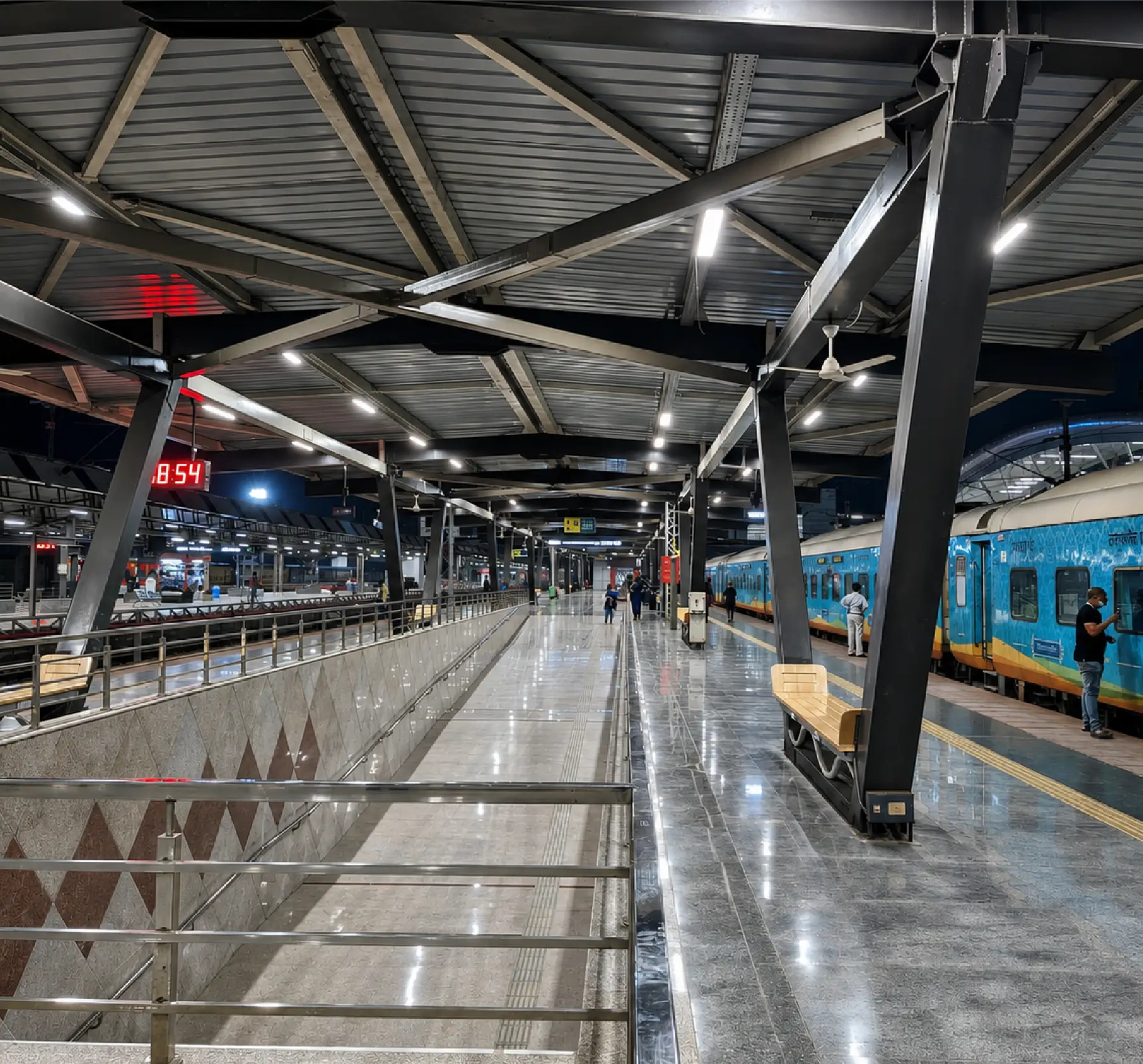
Sustainable Lighting Solutions for Municipal/Government Projects
Urban infrastructure today demands more than reliable illumination. It requires solutions that reduce energy consumption, minimise maintenance, and support long-term sustainability. Sustainable lighting solutions of municipal projects combine LED technology, smart controls, and renewable energy to create safer, more efficient public spaces. From roads and parks to civic buildings, these systems help municipalities improve operational efficiency while supporting smart city initiatives and environmental goals.
What Are Sustainable Lighting Solutions?
Sustainable lighting solutions are systems designed to maximise illumination while minimising energy use, carbon emissions, and maintenance requirements. They incorporate LED technology, smart controls, adaptive lighting, and renewable energy sources such as solar power. These Sustainable municipal lighting solutions improve efficiency without compromising visibility, making them ideal for streets, parks, public facilities, transport hubs, and government campuses. Their long operational life also reduces replacement frequency, supporting cost-effective public infrastructure management.
Why Sustainable Lighting Matters for Government Infrastructure?
Public lighting operates for extended hours every day, making it a significant contributor to municipal energy consumption. Investing in government lighting solutions that prioritise sustainability helps governments improve operational efficiency while meeting environmental objectives.
The key benefits include:
- Reduced electricity consumption and operating costs
- Lower carbon emissions across public infrastructure
- Improved public safety through consistent illumination
- Reduced maintenance due to longer product life
- Support for government energy-saving lighting projects and smart city initiatives
Key Features of Sustainable Municipal Lighting
- High-efficiency LED technology with lower energy consumption
- Smart dimming and adaptive lighting controls
- Long operational lifespan with minimal maintenance
- Durable construction for harsh outdoor environments
- Compatibility with solar-powered systems
- Reduced environmental impact through lower carbon emissions
- Remote monitoring for proactive maintenance
- Designed to support Energy-efficient municipal lighting systems
Types of Sustainable Lighting Used in Public Projects
| Lighting Type | Typical Application | Key Benefit |
| LED Street Lights | Roads and highways | High energy savings |
| Solar Street Lights | Rural roads and parks | Off-grid operation |
| Smart Pole Lighting | Smart cities | Integrated monitoring and controls |
| Flood Lighting | Public grounds and stadiums | Wide-area illumination |
| Landscape Lighting | Parks and gardens | Improved aesthetics with efficiency |
Role of LED Lighting in Sustainable Public Infrastructure
LED technology forms the foundation of LED solutions for government projects due to its superior efficiency, reliability, and longevity. Compared to conventional lighting, LEDs consume significantly less power while providing better illumination quality.
The key advantages include:
- Up to 50–70% lower energy consumption
- Longer service life with fewer replacements
- Better light distribution and visibility
- Reduced maintenance costs
- Lower environmental impact
Smart Controls for Sustainable Municipal Lighting
Smart lighting systems optimize performance by adjusting illumination based on real-time conditions.
- Motion and occupancy sensors
- Automatic dimming during low-traffic periods
- Remote monitoring and diagnostics
- Scheduled lighting profiles
- Data-driven energy optimisation
These technologies contribute to smart and green public lighting while improving operational efficiency.
Solar-Powered Lighting for Government and Municipal Projects
Solar-powered lighting combines renewable energy with efficient LED technology, making it an ideal solution for remote areas and locations with limited grid access. It reduces dependence on conventional electricity while lowering operating costs.
The key applications include:
- Village roads
- Parks and gardens
- Bus stops
- Parking areas
- Public pathways
Solar systems are an important component of Sustainable street lighting solutions for government projects.
Sustainable Lighting Applications Across Public Spaces
| Public Space | Recommended Lighting |
| Roads & Highways | Smart LED street lighting with adaptive controls |
| Parks | Energy-efficient landscape and bollard lighting |
| Government Buildings | Smart LED lighting |
| Public Parking | High-efficiency LED flood lighting with smart sensors |
| Bus Stops & Walkways | Pedestrian lighting with motion-based controls |
Benefits of Sustainable Lighting for Municipal Projects
- Lower energy consumption and utility costs
- Reduced maintenance and replacement expenses
- Improved road and pedestrian safety
- Lower greenhouse gas emissions
- Enhanced reliability during long operating hours
- Supports smart city sustainable lighting infrastructure
- Better return on infrastructure investments
- Helps deliver Government street lighting upgrade projects efficiently
How to Choose Sustainable Lighting for Government Projects
Step 1: Assess the lighting requirements based on location, traffic, and usage.
Step 2: Choose high-efficiency LED luminaires with proven performance.
Step 3: Evaluate smart control features such as dimming and remote monitoring.
Step 4: Consider solar-powered solutions for off-grid or low-access locations.
Step 5: Select products with recognised sustainability certifications.
Step 6: Ensure compliance with applicable government standards and project specifications.
Step 7: Evaluate lifecycle costs instead of only initial investment to maximise long-term value.
Crompton Sustainable Lighting Solutions for Public Infrastructure
Crompton offers a comprehensive portfolio of sustainable street lighting solutions designed for municipal and government infrastructure. Engineered for performance, durability, and energy efficiency, these lighting solutions support modern public infrastructure while reducing lifecycle costs.
The key advantages include:
- All Crompton lighting products are GreenPro certified, demonstrating the commitment to environmentally responsible manufacturing and sustainable building practices.
- High-efficiency LED technology for lower energy consumption
- Reliable performance across diverse outdoor applications
- Smart lighting compatibility for connected infrastructure
- Durable designs with low maintenance requirements
Sustainable Lighting Project Checklist for Municipal Buyers
- Choose energy-efficient LED luminaires
- Verify recognised sustainability certifications
- Assess lifecycle and maintenance costs
- Consider smart lighting controls
- Evaluate solar-powered options where suitable
- Ensure compliance with project standards
- Plan for future scalability and smart city integration
FAQs on Sustainable Lighting for Government Projects
Q. What are sustainable lighting solutions for municipal projects?
A. They combine LED technology, smart controls, and renewable energy to reduce energy consumption, maintenance costs, and environmental impact.
Q. How can LED street lighting reduce energy costs for government projects?
A. LED systems consume significantly less electricity than conventional lighting while offering longer service life and reduced maintenance.
Q. What are the benefits of solar street lights for municipalities?
A. They reduce grid dependency, lower operating costs, and provide reliable lighting in remote or off-grid locations.
Q. How does smart lighting support sustainable city development?
A. Smart controls optimize energy use through automated dimming, remote monitoring, and adaptive lighting based on real-time conditions.
Q. What type of lighting is best for public infrastructure projects?
A. High-efficiency LED lighting integrated with smart controls and solar technology provides the best balance of performance, sustainability, and lifecycle value.
Q. How can government projects reduce carbon emissions with efficient lighting?
A. By replacing conventional fixtures with LEDs and intelligent controls, governments can significantly reduce electricity consumption and associated emissions.
Q. Why are energy-efficient lighting solutions important for smart cities?
A. They improve operational efficiency, lower costs, reduce environmental impact, and support connected infrastructure, making them essential for future-ready urban development


