


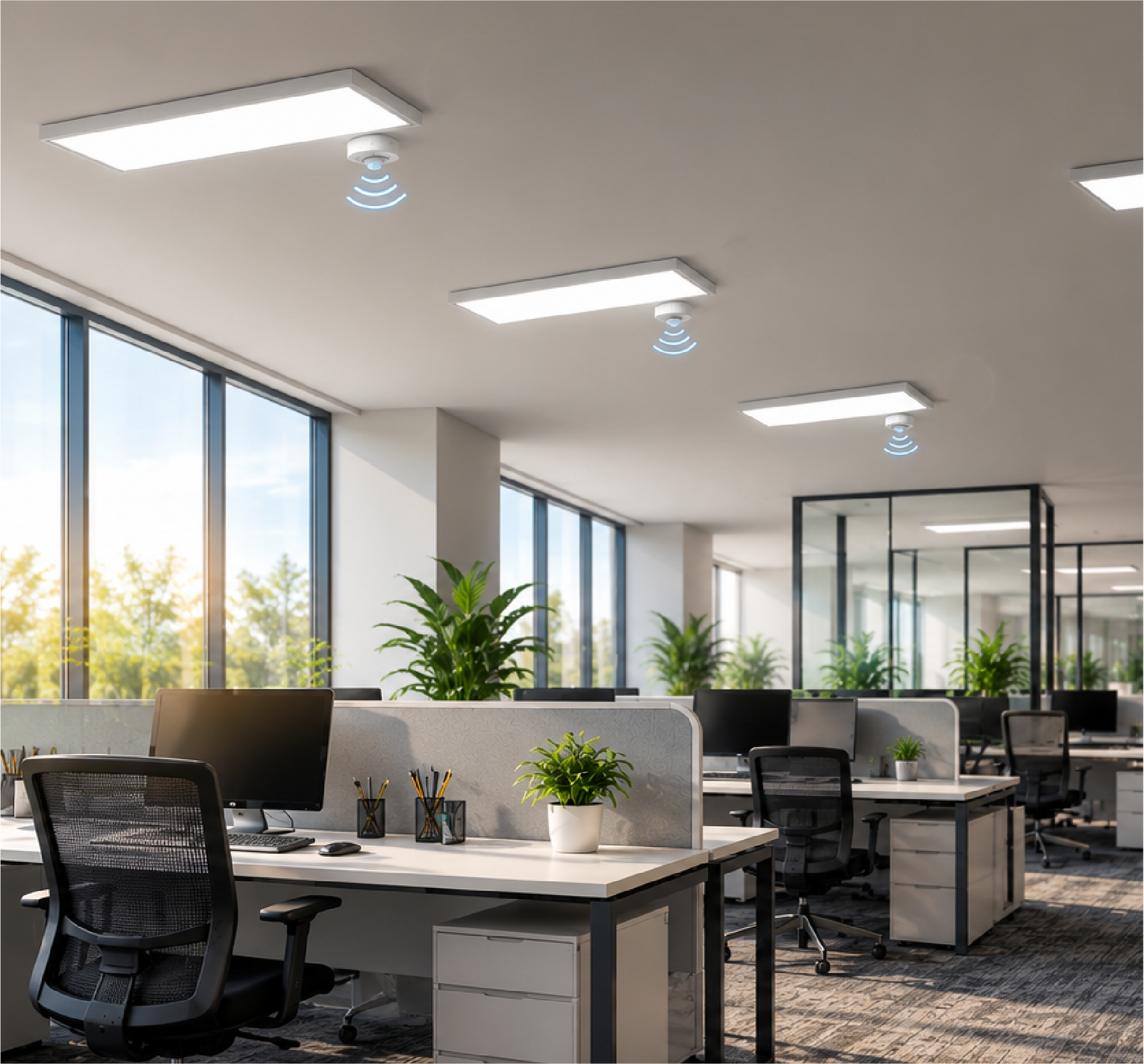
Why Are Occupancy and Daylight Sensors Becoming Essential for Modern Infrastructure?
Modern infrastructure is becoming smarter, more connected and increasingly focused on energy efficiency. From commercial buildings and offices to transportation hubs, industrial facilities and public spaces, lighting systems are no longer expected to simply illuminate an area. They are now designed to respond to how spaces are used and how much natural light is available.
This is where occupancy and daylight sensors are becoming increasingly important. These sensors allow lighting systems to automatically adjust based on human presence and available daylight, reducing unnecessary energy consumption while maintaining comfortable and effective illumination.
As organisations look for smarter ways to manage building energy use and improve operational efficiency, sensor-based lighting control is becoming an important part of modern infrastructure.
How Do Occupancy and Daylight Sensors Work?
Occupancy sensors detect whether people are present in a particular area. Depending on the technology used, they can identify movement or the presence of occupants and communicate this information to a lighting control system. Lights can then be switched on, switched off or dimmed according to actual occupancy.
Daylight sensors, on the other hand, measure the amount of natural light available in a space. When sufficient daylight is entering through windows, skylights or other openings, the lighting system can reduce artificial lighting levels. As daylight decreases, artificial lighting can increase to maintain the required illumination.
When used together, these technologies create a more responsive lighting environment. Instead of operating according to fixed schedules, lighting can respond dynamically to both people and environmental conditions.
Why Are Sensors Important for Modern Infrastructure?
Traditional lighting systems often operate for predetermined hours, regardless of whether a space is occupied or whether sufficient natural light is available. This can result in unnecessary energy consumption.
Occupancy and daylight sensors help address this limitation by making lighting more responsive.
For example, lights in a meeting room can remain at lower levels when the room is unoccupied and automatically increase when people enter. Similarly, lights near windows can be dimmed when natural daylight provides sufficient illumination.
This approach supports several important infrastructure goals:
- Reduced unnecessary lighting consumption
- Better control over lighting operations
- Improved energy efficiency
- Greater occupant comfort
- Reduced operational costs
- More intelligent building management
These benefits make sensor-based lighting particularly relevant for buildings and facilities that operate for long hours or contain multiple areas with varying occupancy patterns.
How Occupancy Sensors Improve Lighting Efficiency
One of the key benefits of occupancy sensors is their ability to ensure that lighting is used when it is actually required.
Large buildings can have corridors, meeting rooms, washrooms, storage areas, parking facilities and other spaces that are not occupied continuously. Keeping lights at full output throughout the day can result in significant energy wastage.
Occupancy-based control allows lighting to respond to actual usage.
In an office, for instance, lights can automatically activate when employees enter a meeting room and switch to a lower level or turn off when the room becomes vacant. In warehouses or industrial facilities, lighting can be controlled according to activity in different zones.
This makes occupancy sensors particularly useful in facilities where occupancy levels change throughout the day.
Why Are Daylight Sensors Essential in Modern Buildings?
Natural daylight can significantly influence how much artificial lighting a building requires. However, conventional lighting systems generally do not respond to changing daylight conditions.
Daylight sensors provide a way to bridge this gap.
When sufficient natural light is available, the lighting system can reduce artificial light output. When clouds, changing weather or evening conditions reduce available daylight, artificial lighting can increase accordingly.
This process, often associated with daylight harvesting, helps buildings make better use of available natural light while maintaining suitable illumination levels.
The importance of daylight sensors becomes particularly clear in buildings with large windows, atriums, skylights or other areas that receive substantial natural light.
The Role of Sensors in Smart Infrastructure
Smart infrastructure relies on systems that can collect information, respond to changing conditions and operate more efficiently. Occupancy and daylight sensors support this approach by providing real-time information to lighting control systems.
Instead of treating every area in a facility in the same way, smart lighting systems can respond to individual space requirements.
For example, a building management system can use occupancy information to understand which areas are being used and daylight information to determine how much artificial lighting is required. This enables more precise lighting control.
Sensor-based lighting can therefore become part of a wider smart infrastructure ecosystem alongside building automation, energy monitoring, HVAC controls and other connected systems.
What Are the Benefits of Combining Both Sensors?
Occupancy and daylight sensors address different aspects of lighting demand, but their combined use can provide greater control.
Occupancy sensors answer the question: Is anyone using this space?
Daylight sensors answer another question: How much artificial light is actually needed? Together, they allow lighting systems to make more informed decisions.
A space may be occupied but already receive sufficient natural light. In that situation, the lighting system does not necessarily need to operate at full output. Similarly, an occupied space with limited daylight may require higher artificial lighting levels.
This combination can help create a more efficient and responsive lighting strategy.
Supporting Energy-Efficient and Sustainable Buildings
Energy efficiency has become an important consideration in the design and operation of modern buildings. Lighting can represent a significant part of a facility's electricity consumption, particularly in buildings that operate for extended periods.
Automated lighting control can help reduce avoidable energy use by matching lighting operation with actual requirements.
The value goes beyond simply switching lights on and off. Dimming, zoning and automated control can allow lighting systems to operate at appropriate levels rather than continuously running at maximum output.
This supports broader sustainability objectives and can complement other energy-efficient technologies used within modern infrastructure.
Improving Comfort and User Experience
Energy efficiency is important, but lighting systems must also provide a comfortable environment for occupants.
Poorly controlled lighting can create areas that are excessively bright or insufficiently illuminated. Automated sensor-based systems can help maintain more consistent lighting conditions as occupancy and daylight levels change.
For workplaces, educational institutions, healthcare facilities and public buildings, this can contribute to a more comfortable and adaptable environment.
The ability to automatically adjust lighting also reduces the need for users or facility teams to manually control lights throughout the day.
Where Can These Sensors Be Used?
Occupancy and daylight sensors can be applied across a wide range of infrastructure. Common applications include:
- Commercial offices
- Industrial facilities
- Warehouses
- Educational institutions
- Hospitals and healthcare facilities
- Retail spaces
- Parking areas
- Transportation facilities
- Public buildings
- Smart city infrastructure
The exact sensor configuration depends on the size, layout, usage patterns and lighting requirements of the facility.
Moving Towards Smarter Lighting Control
The growing focus on energy efficiency, automation and connected infrastructure is changing how lighting systems are designed. Fixed lighting schedules are increasingly being complemented or replaced by systems that respond to real-world conditions.
Occupancy sensors help ensure lighting is aligned with human activity, while daylight sensors help optimise artificial lighting according to available natural light. When integrated into a broader lighting control system, they can contribute to more efficient, responsive and intelligent infrastructure.
As buildings become increasingly connected, these technologies are likely to play an even greater role in lighting design and energy management.
FAQs
Why are occupancy sensors important for modern infrastructure?
Occupancy sensors help lighting systems respond to actual human presence. They can reduce unnecessary lighting operation in unoccupied spaces, improve automation and support more efficient energy management.
Why are daylight sensors essential for modern buildings?
Daylight sensors measure available natural light and allow artificial lighting to adjust accordingly. This can reduce unnecessary energy use while maintaining suitable illumination levels.
What are the benefits of occupancy and daylight sensors?
The key benefits include improved energy efficiency, automated lighting control, reduced unnecessary lighting operation, better occupant comfort and more responsive building management.
What is the role of occupancy and daylight sensors in smart infrastructure?
They provide real-time information about occupancy and available daylight, enabling lighting systems to automatically adjust to changing conditions. This makes them an important component of smart and energy-efficient infrastructure.